USCIS Tightens Signature Rules, Increasing Risk of Rejection for H-1B and Green Card Applications
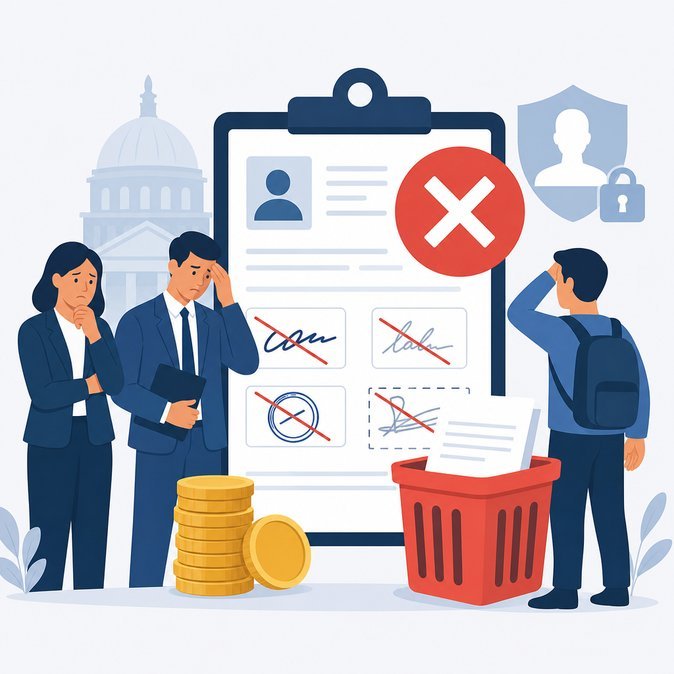
The U.S. Citizenship and Immigration Services (USCIS) has issued an interim final rule titled “Signatures on Immigration Benefit Requests”, introducing stricter requirements for signatures on immigration forms, including H-1B visa and green card applications.
The new rule, which will take effect on July 10, 2026, states that any application submitted without a valid signature may be rejected at intake or denied during adjudication. In such cases, USCIS also reserves the right to retain filing fees, significantly increasing financial risks for applicants and employers.
Stricter Definition of Valid Signatures
Under the updated policy, USCIS emphasizes traditional handwritten “wet ink” signatures as the standard. While scanned copies of original wet signatures remain acceptable, several forms of digital or alternative signatures will no longer be valid, including:
- Typed names used as signatures
- Digitally inserted signature images
- Signature stamps
- Signatures provided by unauthorized individuals, including employees or family members
Officials say the change is aimed at preventing misuse, including copied or software-generated signatures and unauthorized filings.
Increased Scrutiny Even After Filing
A key change in the rule is expanded discretion for immigration officers. Even after a filing receives a receipt notice, officers may later reject or deny a case if a signature is found invalid. Such decisions could lead to loss of filing fees, which often amount to several thousand dollars, particularly in employment-based visa cases.
Immigration attorneys warn that the rule could have serious consequences for employers and foreign workers, especially those relying on fully digital HR systems.
Concerns for Employers and Applicants
Experts suggest that companies handling large volumes of immigration paperwork may need to revise their processes. Recommended compliance steps include:
- Ensuring all signatories have proper legal authorization
- Retaining original signed documents for extended periods
- Avoiding digital shortcuts such as copied signature files
- Adopting hybrid paper-based workflows for signature pages
Limited Time for Compliance
Although public comments will be accepted until July 10, 2026, the rule takes effect on the same date, leaving little time for employers and applicants to adjust.
Analysts warn that failure to comply could result in missed visa opportunities, loss of premium processing fees, and disruptions in legal work authorization.
The policy marks one of the most significant procedural tightening measures in recent years for U.S. immigration filings, particularly affecting H-1B visa and green card applicants.