Grand “Bangladesh Day Parade” Held in New York with Colorful Celebrations
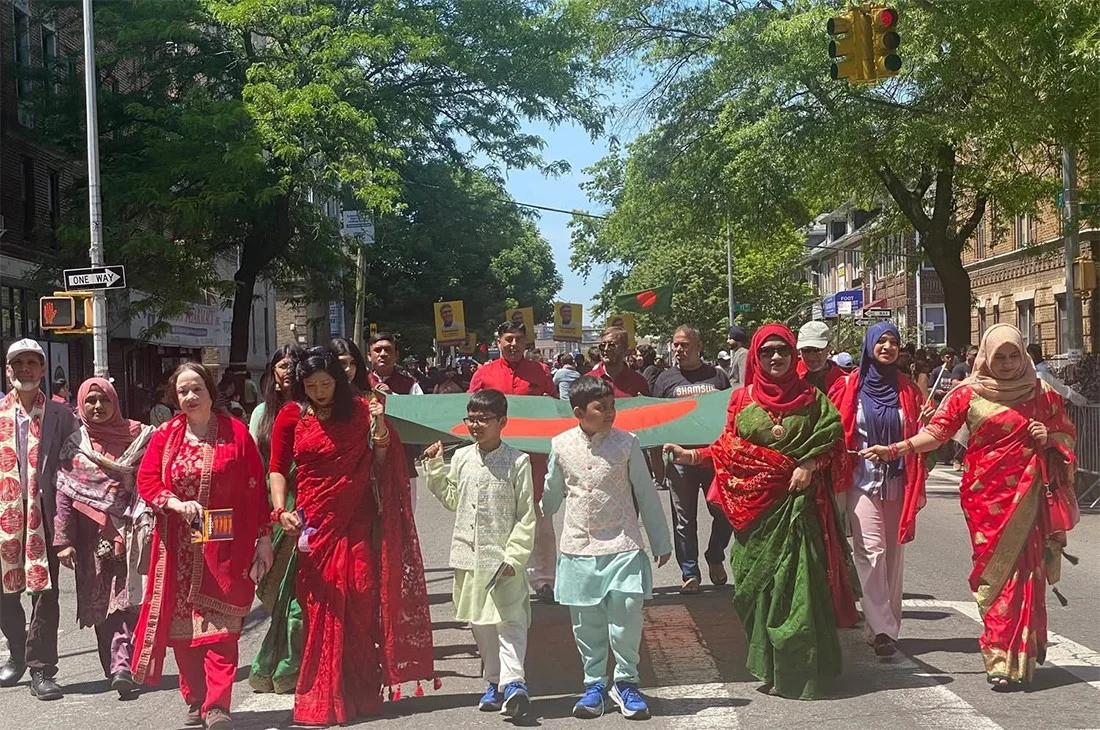
The vibrant “Bangladesh Day Parade” was held on May 17 in New York, United States, celebrating Bangladeshi culture, heritage, and diaspora achievements with large-scale participation from expatriates and public representatives.
Waving red and green flags and chanting cultural slogans, thousands of Bangladeshi expatriates joined the parade, which also featured participation from elected officials at the U.S. Congress, state, and city levels. Among the distinguished guests were Congresswoman Grace Meng, Congressman Tom Suozzi, State Senator Jessica González, State Assemblywoman Catalina Cruz, and City Council Member Shekar Krishnan.
Organizers said more than 120 social, cultural, professional, and regional organizations took part in the parade, making it one of the largest Bangladeshi diaspora gatherings in the city.
The event, chaired by attorney Moin Chowdhury, District Leader of the Democratic Party, highlighted the growing influence of the Bangladeshi community in New York’s multicultural society. The parade route stretched through Jackson Heights, starting from 69th Street and proceeding along 37th Avenue to 87th Street, with police ensuring traffic control and public safety.
Members of the Bangladeshi-American police force, cultural groups, artists, and performers also participated, adding color and energy to the procession. Several Bangladeshi actors, singers, and performers joined floats and cultural segments, while dance and music performances entertained spectators along the route.
Community leaders M. Aziz and M.M. Shaheen served as Grand Marshals of the parade. The event also reflected on its historical roots, recalling its early organization in 1987 under “Ruposhi Bangla TV” at the New York City Mayor’s office premises, later followed by Bangladesh Society-led initiatives in Astoria Park.
However, some community members noted the absence of key organizations, including the Bangladesh Society leadership and participation from sections of the Jalalabad community. This led to mixed reactions within the expatriate community regarding representation and the overall objectives of the event.
Despite differing opinions, organizers emphasized that the parade aimed to strengthen the visibility of Bangladeshis in the multicultural fabric of the United States and celebrate their contributions to society.