70,000 Children in Bangladesh Have Not Received Any Vaccination
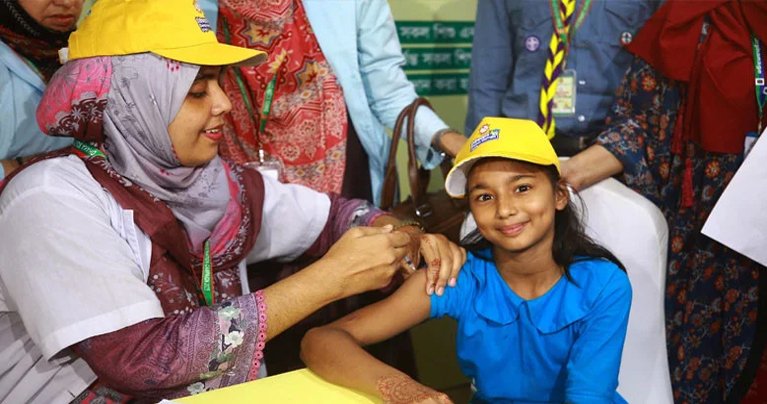
Despite significant progress in Bangladesh’s Expanded Programme on Immunization (EPI), around 70,000 children in the country have not received any vaccines, according to a recent statement by the United Nations Children’s Fund (UNICEF).
UNICEF also reported that approximately 400,000 children have not received their full set of vaccines, highlighting gaps in immunization coverage across the country. The data indicates that urban areas face a higher rate of unvaccinated children compared to rural regions. While about 79% of children in urban areas are fully vaccinated, 2.4% have not received even a single dose, and 9.8% have received incomplete vaccination. In contrast, around 85% of children in rural areas have completed their full vaccination schedule.
According to the report, Bangladesh’s EPI program currently helps save an estimated 94,000 lives annually and prevents illness in around 5 million children. It also notes that every one U.S. dollar invested in immunization generates an estimated return of 25 dollars, underscoring the economic and public health benefits of vaccination.
However, challenges remain in achieving universal immunization coverage. UNICEF highlighted issues such as workforce shortages, difficulties in reaching urban slums, limited access in remote areas, and changes in support from global partners like Gavi, which may require the government to rely more heavily on its own resources for funding, procurement, cold chain systems, and vaccine delivery.
UNICEF Representative in Bangladesh, Stanley Gwavuya, said that Bangladesh has made remarkable progress since the EPI program began in 1979, increasing full immunization coverage from just 2% to over 81%. He credited this success to strong government commitment, along with the efforts of health workers, NGOs, and development partners.
He further emphasized the need for renewed efforts to reach every child, particularly those in remote and underserved urban areas, noting that the final stages of achieving full immunization coverage are often the most challenging. UNICEF reaffirmed its continued support to Bangladesh through technical assistance, supply chain management, cold chain systems, and digital innovations.
Meanwhile, a representative of the World Health Organization in Bangladesh, Dr. Ahmed Jamshid Mohammad, reiterated the importance of vaccination in improving public health and strengthening health systems. He noted that ensuring equal access to vaccines for every child is essential for building a healthier and more resilient future.
UNICEF, WHO, and partners such as Gavi continue to support Bangladesh’s immunization efforts, working to protect children against preventable diseases including polio, measles, rubella, and rotavirus.