BNP Promises Full Rights for Minorities if Elected, Says Tareq Rahman
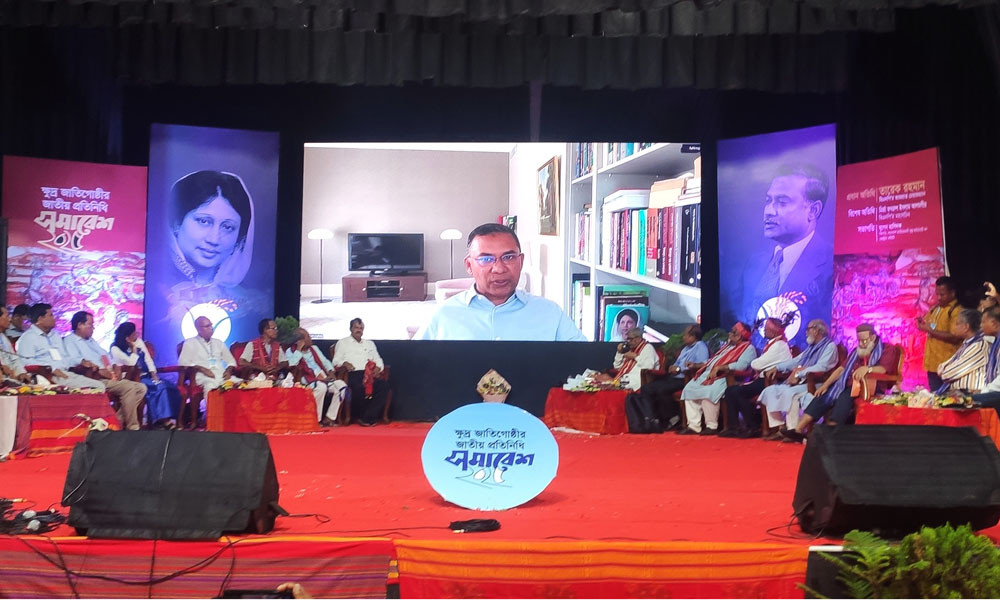
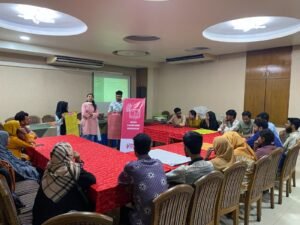
BNP’s acting chairman Tareq Rahman has pledged to ensure all rights for minority communities in Bangladesh if his party comes to power. He made the remarks while virtually addressing the first national representative assembly of the Nationalist Minority Group Party at the Tareq Smriti Auditorium in Mymensingh Town Hall on Saturday.
“Every community’s language, culture, and values deserve respect and protection. It is the state’s responsibility to preserve diversity and promote development. If BNP returns to power, we will ensure all rights of minority groups,” Tareq Rahman said.
He emphasized that BNP’s 31-point state reform plan explicitly guarantees social, political, cultural, and economic rights for all groups, regardless of ethnicity or religion, while ensuring their safety.
BNP Secretary General Mirza Fakhrul Islam Alamgir highlighted the importance of building a new Bangladesh following years of what he described as oppressive rule. “Under Tareq Rahman’s leadership, a Bangladesh will emerge where everyone’s rights are protected,” he said.
He warned of ongoing conspiracies to disrupt future elections and encouraged unity among all citizens, drawing parallels to the 1971 struggle for independence and sovereignty.
The assembly was presided over by Nationalist Minority Group Party President Mrigen Hagidger and attended by senior BNP leaders, including adviser Bijon Kanti Sarkar, joint secretary Syed Emran Saleh Prince, divisional organising secretary Shariful Alam, and other local leaders.
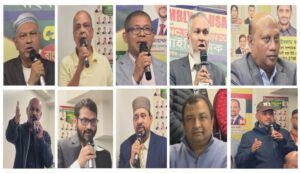
Speakers also included representatives from various indigenous and minority communities across the country, such as Pramod Chandra Barman, Eugene Nakorek, Bipul Hajong, Hiram Helena Tarang, Ripon Chandra Banai, and Prashanta Kumar Singh.
The event opened with the national anthem, followed by traditional dance performances by young women in ethnic attire. BNP Secretary General Mirza Fakhrul also distributed 26 sewing machines to women as part of the program. A total of 37 artists from flatland minority communities performed dances representing their respective regions.