Bangladesh’s Ethnic Communities Continue to Face Underprivilege
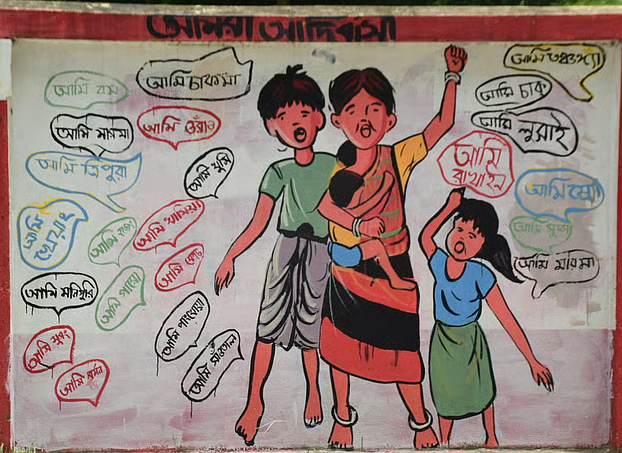
Despite ongoing promises for equality and reform, ethnic communities in Bangladesh remain deeply underprivileged, facing persistent discrimination, violence, and exclusion from political processes. Recent reports reveal that human rights violations against these communities have not only continued but, in many cases, worsened over the past year.
According to a report by the Kapeng Foundation, incidents of violence, harassment, and land grabbing have increased, particularly in the Chittagong Hill Tracts (CHT) and surrounding plains. Between January and July 2025 alone, there were dozens of documented cases involving assaults, forced religious conversions, and sexual violence targeting ethnic minorities. Women from these communities remain especially vulnerable, with multiple reports of rape and gang rape, as well as deaths resulting from targeted attacks.
The long-awaited implementation of the 1997 Chittagong Hill Tracts Peace Accord remains stalled. Key government reform commissions have largely excluded representatives from ethnic groups, undermining efforts to address their longstanding grievances. The Constitutional Reform Commission notably omitted any recognition of “indigenous” peoples, exacerbating feelings of marginalization.
Violence has even spilled into urban areas. Earlier this year, indigenous students in Dhaka protesting the removal of symbolic cultural representations from textbooks were attacked, highlighting the pervasive discrimination faced by these communities nationwide.
Community leaders and human rights advocates warn that without meaningful inclusion and justice, the cycle of underprivilege and violence will continue, threatening the social fabric of Bangladesh. Today’s observance of the International Day of the World’s Indigenous Peoples underscores the urgent need for the government and society to take concrete steps toward equality, protection, and recognition.