U.S. Midterm Elections: Lessons from History
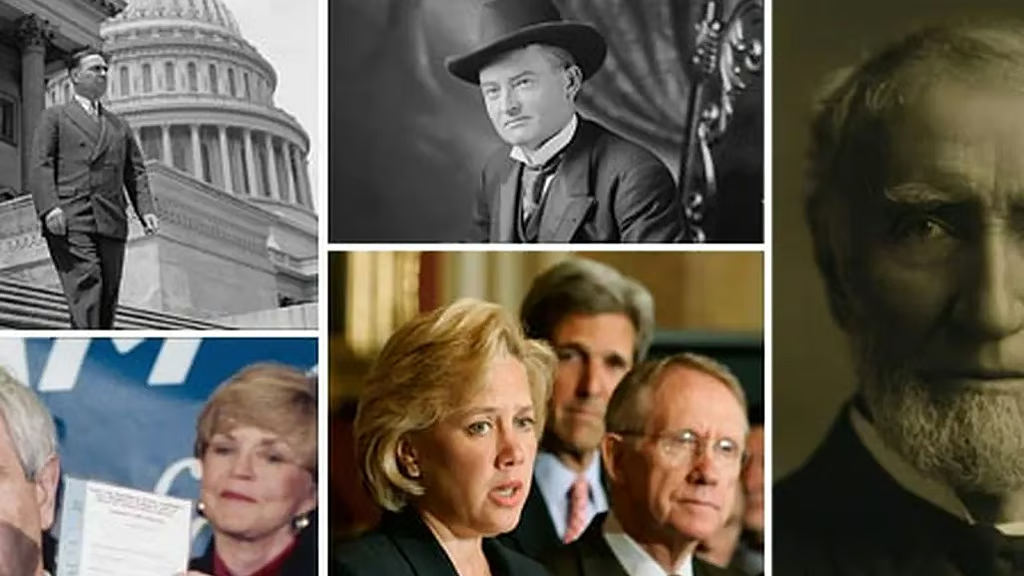
History shows that angry American voters often use midterm elections to rein in the party in power. Democrats have a strong opportunity to win control of the House this year, but the key question is whether Republicans can overturn the political equation.
As the United States approaches its November 2026 midterm elections, Democrats appear to be in a favorable position to regain control of at least one, and potentially both, chambers of Congress.
However, predicting the size of their victory remains difficult. In American politics, the margin of victory and the scale of a party’s majority can be just as important as winning control itself.
To understand why, it is worth revisiting two dramatic midterm elections in the late 19th century that fundamentally changed the country’s political direction.
Two historic elections that reshaped American politics
Political analysts often describe major shifts in the balance of power as political realignments. Two midterm elections in the late 19th century stand out as defining examples.
1874: A turning point in post-Civil War America
The end of the Reconstruction era following the Civil War is often associated with the disputed presidential election of 1876. Republican candidate Rutherford B. Hayes lost the popular vote but secured the presidency through a political compromise.
Under the agreement, federal troops protecting Black Americans in Southern states were withdrawn. Although Hayes entered the White House, the consequences for Black citizens were severe. Southern states faced fewer obstacles in restricting their voting and civil rights.
The political groundwork for that compromise had been laid two years earlier, during the 1874 midterm elections.
Republican President Ulysses S. Grant’s administration was weakened by financial scandals and the economic collapse of 1873. Democrats took advantage of the situation, gaining more than 90 seats in the House of Representatives amid allegations of irregularities and voter intimidation in the South.
The result ended Republican dominance of the House, which had continued since Abraham Lincoln’s election in 1860.
White supremacists used violence to prevent Black Americans from voting and took control of Southern state governments. Discriminatory laws followed, ushering in the Jim Crow era of institutionalized racial segregation and oppression that lasted for nearly a century.
The Democratic takeover of the House in 1874 effectively signaled the collapse of Reconstruction. The withdrawal of federal troops under the 1876 compromise formalized that outcome.
1894: Republican resurgence and the end of political deadlock
For nearly two decades after 1874, American politics was marked by intense competition and institutional deadlock between Democrats and Republicans.
Control of the House and Senate frequently rested with different parties, while changes in the White House made it difficult for either side to pursue a consistent national policy agenda.
Between Ulysses S. Grant’s victories in 1868 and 1872 and William McKinley’s election in 1896, no presidential candidate received at least 50 percent of the popular vote. The period became known as an era of political stalemate.
The second term of Democratic President Grover Cleveland, from 1893 to 1897, was particularly difficult. The Panic of 1893, major railroad strikes and protests by unemployed workers in Washington shook the administration. Before the Great Depression of the 1930s, it was one of the worst economic crises in U.S. history.
The 1894 midterm election became one of the biggest political defeats in American history. Angry voters punished the governing Democrats, who lost more than 100 House seats.
Before the election, Democrats held a substantial House majority of 218 to 124. Afterward, their representation fell to just 104 seats, while Republicans surged to 244, taking full control of the chamber.
The result marked a major political realignment and paved the way for a new period of Republican dominance, beginning with McKinley’s victory in 1896. His successor, Theodore Roosevelt, later expanded presidential executive power and helped shape the modern American presidency.
Midterm defeats as wake-up calls for presidents
In American political history, major losses by the governing party in midterm elections are often described as a “wake-up call” for the president.
Political landslides on the scale of 1874 and 1894 are rare. But losing 40 or more House seats can force a president to reconsider political priorities and strategy.
Several modern presidents experienced such setbacks, including Harry Truman in 1946, Dwight Eisenhower in 1958, Lyndon B. Johnson in 1966, Gerald Ford in 1974, Bill Clinton in 1994, Barack Obama in 2010 and Donald Trump in 2018.
Their responses and political fortunes varied.
Truman, Clinton and Obama managed to turn their parties’ congressional defeats into opportunities to adjust their political strategies and subsequently win re-election.
Eisenhower was constitutionally barred from seeking another term. Johnson, weakened politically by the Vietnam War, voluntarily withdrew from the presidential race.
Ford and Trump, meanwhile, lost their subsequent presidential elections to Jimmy Carter and Joe Biden, respectively.
The 2026 equation: Will history repeat itself?
A political earthquake comparable to the elections of 1874 or 1894 appears unlikely in 2026. A significant warning to the party controlling the White House, however, would be more consistent with historical trends.
For decades, midterm elections have generally served as an opportunity for voters to express dissatisfaction with the party in power.
The November election comes midway through President Donald Trump’s second term and carries echoes of earlier periods when economic discontent and declining presidential popularity shaped the political outcome.
All 435 seats in the House of Representatives are up for election. Republicans currently hold a narrow majority, with 218 seats to the Democrats’ 212.
Historical trends suggest that, since the 1930s, the party holding the presidency has lost an average of around 26 to 27 House seats in midterm elections. The notable exceptions were the 1998 election under Clinton and the 2002 election under George W. Bush.
Current opinion polls and forecasts by political analysts, including Wolfe Research, suggest that Democrats have a strong chance of regaining control of the House. More than 90 percent of forecasts cited in the report point toward a Democratic takeover.
Trump’s declining approval ratings, along with public frustration over inflation and the rising cost of living, have strengthened that outlook.
Political polarization and gerrymandering—the redrawing of electoral district boundaries to benefit a particular party—mean that neither side needs a massive nationwide swing to change control of the House.
With Republicans holding only a narrow majority, Democrats need to flip just a handful of seats.
A shift of five seats would be enough to give Democrats control of the chamber. If that happens, Democratic leader Hakeem Jeffries, who represents Brooklyn, could become the next House speaker and the first Black person to hold the position in U.S. history.
If Republicans manage to retain their narrow majority against expectations, however, the result would represent a remarkable break from the pattern that has shaped midterm elections for roughly eight decades, dating back to the Truman administration.
Ten of the most influential midterm elections in U.S. history
Midterm elections are often viewed as a referendum on a president’s policies and performance. Although the party in power usually loses seats in its first midterm election, some contests have had a far greater impact on the country’s political direction than others.
1. 1826: The end of the Era of Good Feelings
From 1815 to 1825, the United States experienced a period known as the Era of Good Feelings, when disputes over federal authority and states’ rights temporarily eased.
In the 1826 midterm elections, President John Quincy Adams’ party lost control of both chambers of Congress.
Political opponents led by Andrew Jackson used the public dissatisfaction to build support for a new political movement. Jackson won the presidency in 1828, ushering in a new political era.
Adams had become president after the 1824 election was decided in the House of Representatives, despite Jackson leading in both the popular and electoral votes without securing an Electoral College majority. Henry Clay’s support helped Adams win the House vote.
Dissatisfaction with Adams’ nationalist and expensive economic policies contributed to the opposition’s gains in 1826. Jackson’s supporters then united in Congress to block much of the administration’s agenda, bringing the Era of Good Feelings to an end.
2. 1858: A divided Congress and the road to civil war
The 1858 midterm elections were among the most consequential in American history, helping set the stage for the Civil War.
The conflict over slavery had sharply divided Northern and Southern states. Democratic President James Buchanan’s support for a controversial pro-slavery constitution in Kansas deepened divisions within his own party.
Democrats split between Northern and Southern factions, while the relatively new Republican Party, founded on opposition to the expansion of slavery, won the largest number of seats in the House.
The Republican advance intensified fears among Southern slaveholding states, which threatened to leave the Union if a Republican became president.
That threat became reality after Abraham Lincoln’s election in 1860, when Southern states began seceding and the country moved toward civil war.
3. 1874: The collapse of Reconstruction
The economic crisis of 1873 and a series of corruption scandals in Washington badly damaged President Ulysses S. Grant’s Republican administration.
Republicans lost 96 House seats in the 1874 midterm elections. The defeat weakened the Reconstruction effort following the Civil War and helped pave the way for the eventual withdrawal of federal troops from the South under the political compromise of 1876.
4. 1894: A record Democratic collapse
Facing a severe economic downturn and labor unrest, President Grover Cleveland’s Democratic Party suffered a historic defeat.
Democrats lost 116 House seats and five Senate seats. The result dramatically weakened their influence outside the South and ushered in a new period of Republican dominance.
5. 1910: Republican divisions
President William Howard Taft lost the confidence of the progressive wing of his own party over tariffs, environmental conservation and workers’ rights.
In the 1910 midterm elections, Republicans lost 57 House seats and 10 Senate seats.
The divisions within the party contributed to Theodore Roosevelt’s decision to challenge Taft in the 1912 presidential election. The split helped Democrat Woodrow Wilson win the presidency with just 42 percent of the popular vote.
6. 1930: The Great Depression and the arrival of the New Deal
Following the 1929 Wall Street crash, President Herbert Hoover played down the severity of the economic crisis, arguing that public anxiety was contributing to the problem.
Voters responded by delivering a major setback to Republicans in the 1930 midterm elections. The party lost 49 House seats and eight Senate seats.
The growing public anger helped create the political conditions for Democrat Franklin D. Roosevelt’s victory in 1932. His New Deal agenda, supported by farmers, labor unions and minority groups, laid the foundation for a more active federal government and a modern welfare state.
7. 1946: Truman versus the “Do-Nothing Congress”
Following World War II, a weakened economy and the emerging Cold War put Democratic President Harry Truman under pressure.
In the 1946 midterm elections, Republicans gained 56 House seats and 13 Senate seats, securing control of both chambers for the first time since 1928.
Truman, however, turned the defeat into a political opportunity. He argued that the country’s postwar economic difficulties were not solely the president’s responsibility, but were also the result of an inactive and wealthy-business-friendly Republican-controlled Congress.
He attacked the legislature as a “Do-Nothing Congress” and used the criticism to help secure a surprise victory in the 1948 presidential election.
8. 1966: Voters turn against Johnson
Democratic President Lyndon B. Johnson won a landslide victory in 1964, but his administration faced growing political costs over the expansion of the Vietnam War, despite major achievements in healthcare reform and civil rights legislation.
In the 1966 midterm elections, Democrats lost 47 House seats and three Senate seats.
The result weakened the political momentum of the New Deal coalition and helped create an opening for Republican Richard Nixon’s presidential victory in 1968.
9. 1994: The Republican Revolution
After the failure of healthcare reform efforts and a controversial attempt to lift restrictions on gay people serving in the military, Republicans made major gains under the leadership of Newt Gingrich.
After 42 years, Republicans took control of both chambers of Congress. Democrats lost 53 House seats and seven Senate seats.
President Bill Clinton responded by moving toward the political center and won re-election in 1996.
Two years later, however, the Republican-controlled House impeached Clinton over the Monica Lewinsky scandal. The Senate later acquitted him.
10. 2002: A historic exception to the trend
The 2002 midterm elections broke the long-standing pattern of governing parties losing seats during a president’s first midterm contest.
Republican President George W. Bush’s party gained six House seats and two Senate seats, strengthening its control of both chambers.
The national unity that followed the September 11, 2001, terrorist attacks and Bush’s aggressive campaigning contributed to the Republican gains.
When Bush took office in 2001, the Senate was evenly divided, leaving his administration dependent on Vice President Dick Cheney’s tie-breaking vote. The 2002 election gave Republicans stronger control of Congress.
It was only the second time since 1934 that a president’s party gained seats in both chambers during the first midterm election of his administration. The other instance was under Democrat Franklin D. Roosevelt in 1934, when his party gained nine House seats.
A referendum on the president’s leadership
American voters generally show greater enthusiasm for presidential elections than for midterm contests. Yet history demonstrates that midterm elections are more than routine political changes. They can become powerful forces that reshape national politics for years.
The 2026 election is unlikely to be an exception. Whether it produces a major political shift or marks the beginning of a new era will ultimately be decided by American voters.