22 States Sue Trump Administration Over New Green Card Policy
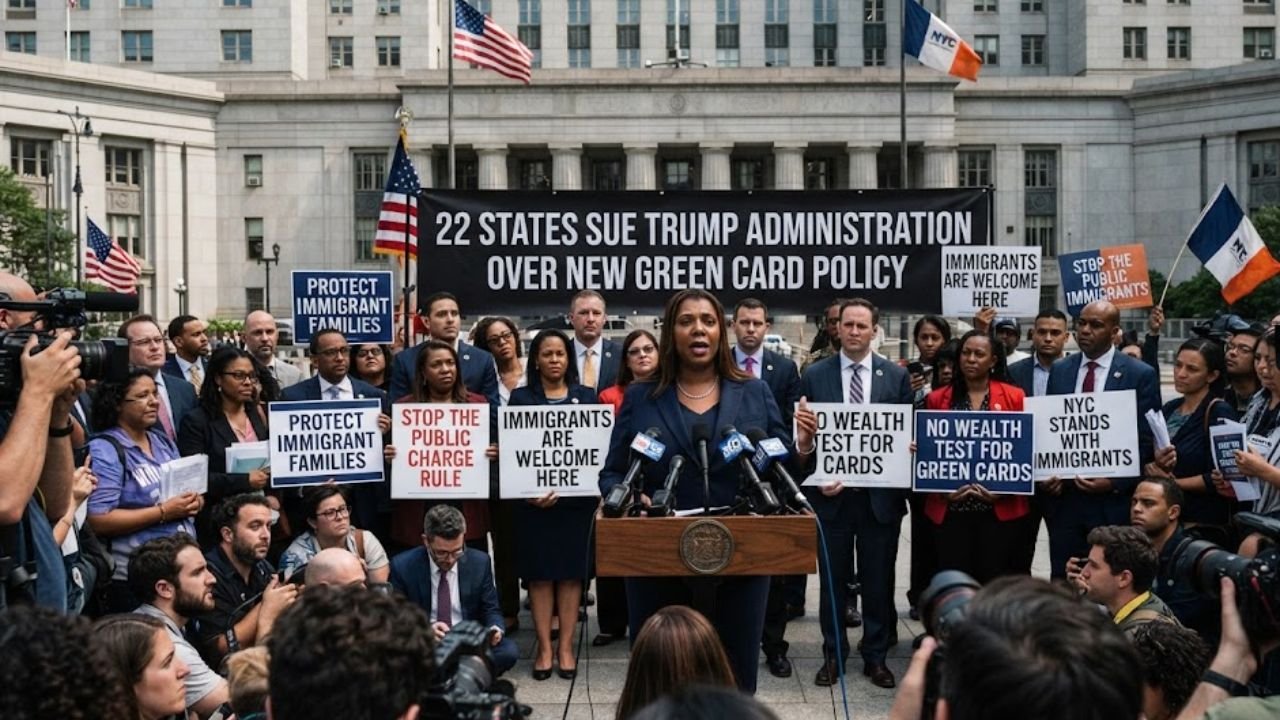
Twenty-two U.S. states and Washington, D.C., have filed a lawsuit challenging a new Trump administration policy that would give immigration officials broader authority to deny green cards, visas and entry to immigrants deemed likely to rely on government assistance. Illinois is among the states joining the lawsuit.
The new rule is scheduled to take effect Friday. Under the policy, immigration officials could consider an applicant’s use or potential use of certain public benefits, including food assistance, Medicaid and housing vouchers, when deciding whether to approve immigration applications.
The policy has raised concerns that many immigrants legally living in the United States could face greater difficulties obtaining green cards.
The states argue that the rule could discourage immigrant families from seeking government assistance, potentially causing states to lose billions of dollars in federal funding. The impact could be particularly significant for households that include both immigrants and U.S. citizens.
New York Attorney General Letitia James said hardworking families should not be forced to choose between receiving essential assistance and facing potential immigration consequences.
According to the lawsuit, federal funding for Medicaid and the Children’s Health Insurance Program could decline by about $4.05 billion annually nationwide. The states involved in the lawsuit could collectively face an estimated $2.2 billion in losses, court documents said.
The immigration provision, commonly known as the “public charge” rule, dates back to an 1882 law. Historically, the rule primarily focused on certain cash-based public benefits. The Trump administration’s proposed changes would broaden the range of government assistance that immigration officials could consider.
New York, Illinois, California, Maryland, Massachusetts, Michigan, New Jersey and Pennsylvania are among the states participating in the lawsuit, along with Washington, D.C.
The lawsuit seeks to block the new rule from taking effect and ultimately have it struck down.