Spain Sees First General Strike in 14 Years Over Housing Crisis
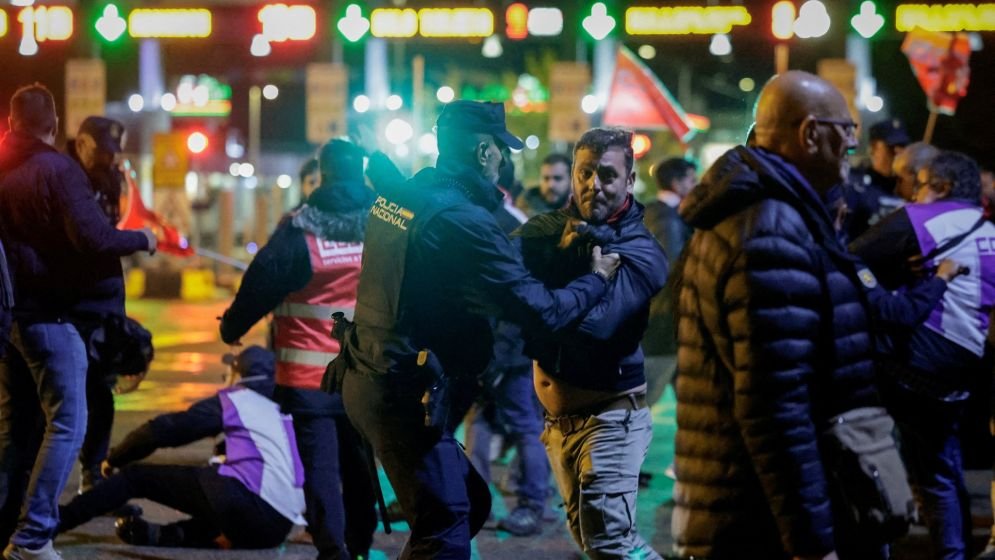
Workers across Spain staged the country’s first general strike in 14 years on Wednesday, protesting soaring rents, unaffordable housing and widespread evictions less than three weeks before a snap general election.
The nationwide walkout was backed by Spain’s two largest trade unions, UGT and CCOO, which together represent more than one million workers. Tenants’ associations also joined the protest, which came amid growing public anger over the country’s housing crisis.
Union leaders reported uneven participation across the country, with stronger support in coastal regions facing severe housing pressures. In Madrid, protesters blocked roads with recycling bins, while many shops in Barcelona remained closed amid fears of unrest.
Spain faces a housing shortage of around 750,000 homes, a figure expected to exceed one million by 2028, according to the country’s central bank. The average monthly rent has reached €1,176, equivalent to about 98.7% of the average monthly salary of a young person, according to the Youth Council of Spain.
“I’m 36 years old and I still can’t move out on my own,” said Madrid resident Jesus Gonzalez, who works in a hospital IT department. He said rising rents and house prices had made independent living increasingly difficult.
Strong turnout in ports and factories
UGT and CCOO reported early strike participation of up to 90% in ports and the automotive sector. They said production had come to a complete halt at several factories, including Volkswagen’s facility in Navarre and SEAT’s plant in Barcelona.
The unions also reported participation rates of 85% in the meat industry, 82% in waste collection and 75% in the energy sector. Participation was lower in healthcare and social services, at 38%, and in the postal service, at 35%.
The unions cited a 10% decline in electricity demand as evidence of disruption across energy-intensive industries. Barcelona’s metro suspended services outside peak commuting hours, while Madrid’s metro operated with reduced services for much of the day.
Tensions also emerged at picket lines in Madrid. The CCOO union said police used pepper spray at the Mercamadrid wholesale market and arrested one protester. Police confirmed the arrest but did not confirm using pepper spray at that location.
Housing crisis becomes election issue
The strike has added pressure on Prime Minister Pedro Sanchez ahead of the November 29 snap election. His Socialist Party is trailing in opinion polls, while corruption allegations involving members of his inner circle and a deadly train crash have created political challenges for his government.
The housing crisis has become a major election issue following weeks of demonstrations over evictions and rising rents. The government has blamed right-wing opposition parties governing several regions and municipalities for the housing shortage.
However, union leaders and protesters have also criticised the central government, holding it responsible for failing to address rising housing costs and inadequate supply.
Spain’s main business lobby, CEOE, criticised the strike, arguing that it would hurt small businesses already struggling with the housing crisis. The organisation called for more home construction and lower taxes on building and property purchases.