US becomes world’s LNG superpower, supplying 93% of global export growth in 2025
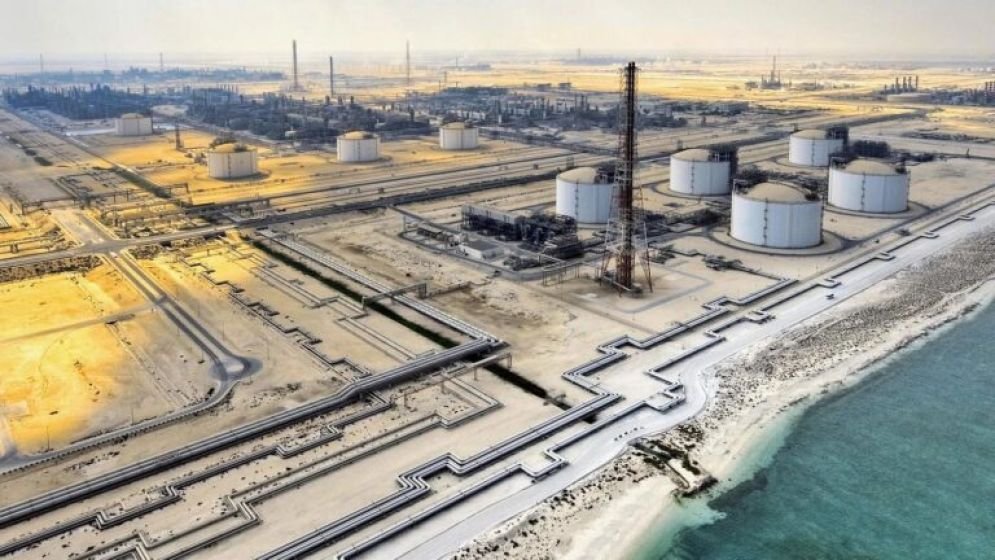
The United States has cemented its position as the world’s largest exporter of liquefied natural gas (LNG), supplying about 93% of the growth in global LNG exports in 2025, according to the Energy Institute’s 2026 Statistical Review of World Energy.
Data cited by OilPrice.com show global LNG exports increased by approximately 1.2 trillion cubic feet last year, with the United States contributing about 1.10 trillion cubic feet of that increase. U.S. LNG exports climbed 27% year-over-year, rising from 4.1 trillion cubic feet in 2024 to 5.2 trillion cubic feet in 2025.
The figures highlight a dramatic transformation in the U.S. energy sector. In 2015, the country exported less than 0.03 trillion cubic feet of LNG. Within a decade, it became the world’s top LNG exporter, capturing 25.4% of the global market. Qatar ranked second with 3.9 trillion cubic feet of exports, followed by Australia with 3.7 trillion cubic feet.
The rapid expansion has been driven by the shale gas revolution, abundant low-cost natural gas reserves, and extensive infrastructure along the U.S. Gulf Coast. Several import terminals were converted into export facilities as domestic gas production surged.
New projects also played a key role. Louisiana’s Plaquemines LNG terminal accounted for more than 60% of global LNG supply growth in 2025, according to the International Energy Agency (IEA), while Corpus Christi Stage 3 also added significant export capacity.
Europe emerged as the biggest destination for American LNG. The U.S. Energy Information Administration (EIA) reported that shipments to Europe averaged a record 10.3 billion cubic feet per day in 2025, up from 6.3 billion cubic feet per day a year earlier. Europe received roughly 68% of total U.S. LNG exports as the continent continued diversifying away from Russian pipeline gas.
The flexibility of U.S. LNG contracts has also increased their global appeal. Unlike many long-term supply agreements, U.S. contracts are typically linked to domestic gas prices and allow buyers to redirect cargoes to markets where demand and prices are strongest.
Record domestic production supported the export boom. U.S. natural gas output reached an all-time high of 103.9 billion cubic feet per day in 2025, accounting for more than one-quarter of global production. Domestic consumption also reached a record 88.4 billion cubic feet per day while pipeline exports to Mexico continued to grow.
Industry analysts note that the growth of LNG has reshaped the global natural gas market, making it increasingly interconnected. LNG now accounts for about 55% of interregional natural gas trade, compared with less than 40% a decade ago, reducing reliance on fixed pipeline networks and allowing cargoes to move more freely between Europe, Asia and other markets.
Looking ahead, U.S. export capacity is expected to continue expanding. Additional projects, including Golden Pass, Port Arthur and Rio Grande LNG, are under construction, while Plaquemines and Corpus Christi Stage 3 continue ramping up production.
The International Energy Agency projects that the United States could supply roughly one-third of the global LNG market by the end of the decade, further strengthening its role in global energy security and international gas trade.