Iran Operates Secret Network of More Than 5,000 Companies to Bypass Sanctions, Reuters Investigation Finds
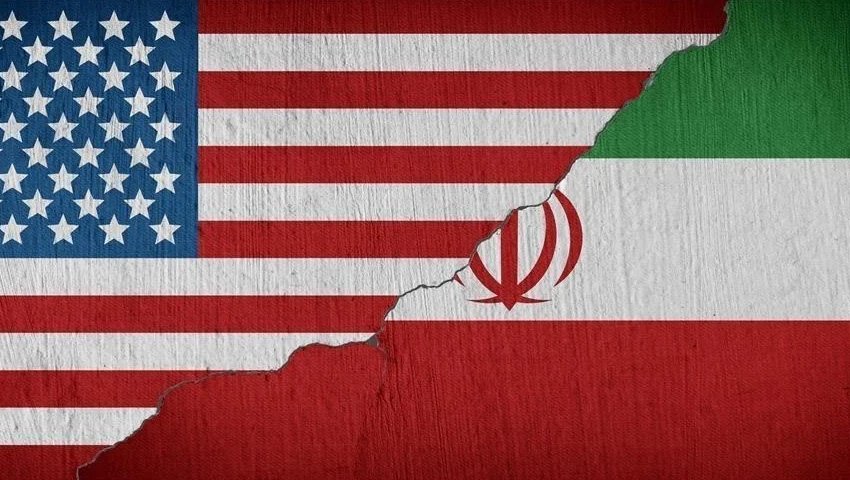
Iran has established a secret network of more than 5,000 companies to procure military equipment and strategic materials despite U.S. naval restrictions and Western sanctions, according to an investigation by Reuters.
The network, whose companies operate under names beginning with “MOD,” has facilitated imports worth billions of dollars in military equipment, explosives, chemicals and heavy vehicles since January 2025. The investigation, conducted in collaboration with Israeli-American risk analytics firm 240 Analytics, found links between the network, Iran’s Islamic Revolutionary Guard Corps (IRGC) and powerful business groups known as bonyads.
The findings offer insight into how Tehran has continued replenishing its missile and drone stockpiles during the conflict with the United States and Israel. Reuters reported that the companies use names beginning with “MOD” or the Persian equivalent “VODJA,” followed by a five- or six-digit number. Their registered addresses are listed as the Iranian Ministry of Defense headquarters in Tehran, while their official establishment dates are shown as February 11, 1979, the date Ayatollah Ruhollah Khomeini came to power. However, corporate records indicate that most were actually established in 2013, when international sanctions were putting pressure on Iran’s oil exports and currency system.
According to the investigation, the companies rely on intermediaries and foreign shell companies, collectively described as trustees, to receive oil revenues and purchase dual-use equipment from overseas suppliers. In 97 percent of the shipment records reviewed by Reuters, transactions were settled without direct cross-border currency transfers, reducing the risk of detection by sanctions-monitoring authorities.
Reuters examined nearly 19,000 import records and cross-checked shipping documents with social media videos, satellite imagery and Iranian state media reports. Economist Noam Binstock of 240 Analytics first identified the network’s structure in June 2025 while examining leaked documents from Bank Sepah. The documents reportedly showed that 36 companies held $1.2 billion in foreign currency at the end of 2024, while other companies held approximately $1.8 billion in local currency.
One company, MOD 346428, emerged as a major importer. Its imports increased from $442 million in the year ending March 2023 to $988 million the following year, placing it among Iran’s 10 largest importers. Between January 2025 and June 2026, the company imported approximately $2.3 billion worth of military-related equipment and materials, including rocket-fuel ingredients, explosives and weapons components.
From January to April 2025, the company imported 886 metric tons of chemicals from China, including sodium chlorate and various perchlorates used in the production of solid rocket propellants. The shipments entered Iran through Bandar Abbas. Sources cited by Reuters alleged that sodium perchlorate from one of these shipments played a role in the deadly explosion at Shahid Rajaee Port on April 26, 2025. The blast killed at least 70 people and injured more than 1,200. Iranian state media identified Sina Port and Marine Services Development Company, owned by the Bonyad Mostazafan foundation, as the organization responsible for storing the chemicals.
The company also imported 435 Iveco trucks, which military forces can use as concealed mobile missile launchers, along with thousands of Toyota Hilux and Land Cruiser pickup trucks. According to the investigation, the IRGC uses such vehicles fitted with heavy machine guns. Iveco said any use of its vehicles in Iran would be beyond its control, while Toyota said it does not conduct business in the country.
Reuters found that military-related imports continued after the conflict began on February 28, 2026. In the weeks before the conflict, Iran imported 93 metric tons of titanium from China, a material that can be used in missile structures and rocket motor casings. It also imported 268 metric tons of nitrocellulose and another 276 metric tons of chemicals, including materials used in rocket propellants and explosives.
Monthly imports fell 47 percent in March to $54 million but rose to $77 million in May. Five shipments of detonators worth $7.6 million also arrived from Russia, with the latest reaching Iran in June. Additional imports from the United Arab Emirates totaled $27 million, while Iran also acquired precision equipment, including computer-controlled lathes and electron-beam furnaces, that can be used to manufacture missile and drone components.
Experts who reviewed the findings described the procurement operation as an industrial-scale effort to rebuild Iran’s missile and drone capabilities. They cautioned, however, that many imported materials have both civilian and military applications.
A U.S. Treasury Department spokesperson said Washington had cut off the Iranian regime’s economic lifelines and would continue countering efforts to evade sanctions and finance military programs. “We are always 10 steps ahead of them,” the spokesperson said.
Miad Maleki, a former senior U.S. Treasury official involved in designing sanctions programs, described the network as a lifeline for Iran’s military and a comprehensive system for managing its military trade. “This has been the lifeline of the regime’s military during the ongoing conflict and for many years before it,” he told Reuters.
China’s Foreign Ministry said it was not aware of the specific findings and opposed attempts to associate China with regional conflicts or damage its reputation. Iran’s relevant agencies, Russia’s Defense Ministry, the White House, U.S. Central Command and the United Arab Emirates had not commented on the investigation at the time of publication.