Why Trump Wants Afghanistan’s Bagram Airbase Back
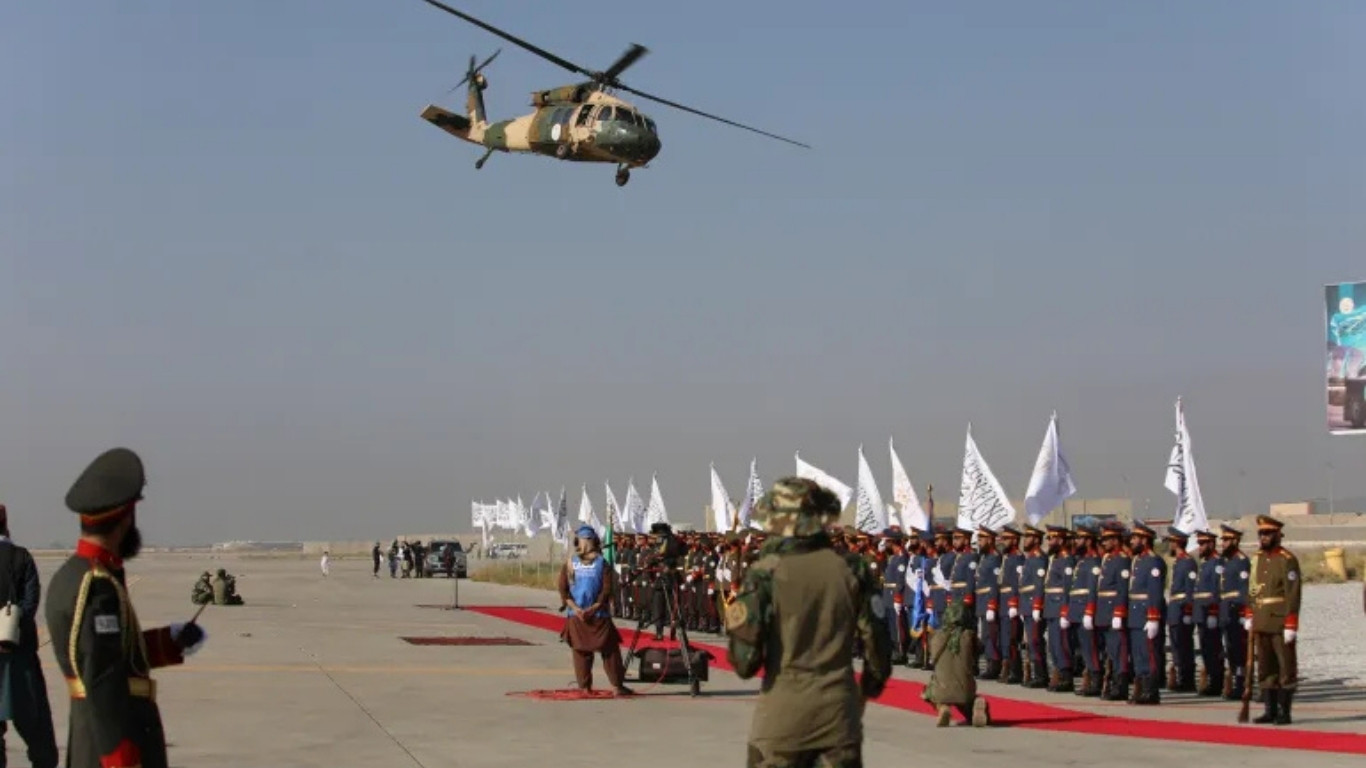
United States President Donald Trump has renewed his push to regain control of Afghanistan’s Bagram airbase, one of the most strategically important military sites in the region.
Speaking alongside UK Prime Minister Keir Starmer earlier this month, Trump said Washington was “trying to get Bagram back,” calling the 2021 handover to the Taliban a mistake. Days later, he warned on social media that “bad things” could happen if the Taliban did not return the facility.
The Taliban has firmly rejected the demand, citing the 2020 Doha Agreement under which the U.S. pledged to respect Afghanistan’s sovereignty.
Bagram, located about 50 kilometers north of Kabul, has a long history of foreign military control. Built by the Soviet Union in the 1950s, it was later used by U.S. and NATO forces as their main hub during the two-decade war in Afghanistan. At its height, it housed around 10,000 personnel and operated as both a military command center and a detention facility.
Analysts say Trump’s interest in Bagram is tied less to its facilities—which were largely destroyed or looted after the 2021 withdrawal—and more to its symbolic and strategic value. The base is seen as a crucial point for projecting power in the region, especially given its proximity to China. Trump himself has described it as being “an hour away” from Chinese weapons facilities.
Security experts, however, doubt that retaking Bagram is realistic. Any move to re-establish a U.S. presence would contradict Washington’s official policy of ending military operations in Afghanistan. It would also undermine the Taliban’s legitimacy, making cooperation unlikely.
Some observers suggest Trump’s demand could be part of a broader negotiating strategy—seeking leverage to recover abandoned U.S. weapons or open the door to talks with the Taliban. For Kabul’s rulers, who are still seeking international recognition, engagement with Washington could provide diplomatic benefits.
Whether the dispute over Bagram escalates into direct confrontation or evolves into bargaining remains uncertain, but the airbase has once again become a focal point in U.S.-Afghanistan relations.