US BNP Without Central Leadership for Over a Decade: Activists Frustrated

For more than a decade, the United States chapter of the Bangladesh Nationalist Party (BNP) has been without a central committee. This prolonged leadership vacuum has created organizational stagnation, leaving grassroots activists frustrated and directionless. Many long-time BNP activists in the US claim that despite their dedication and efforts, they remain deprived of formal organizational recognition.
Political observers note that while the US chapters of parties such as the Awami League, Jatiya Party, and Jasad maintain active committees, the BNP’s lack of a central leadership for so long reflects weakness and mismanagement. They add that due to uncertainty and lack of coordination, BNP’s activities abroad have lost much of their previous momentum.
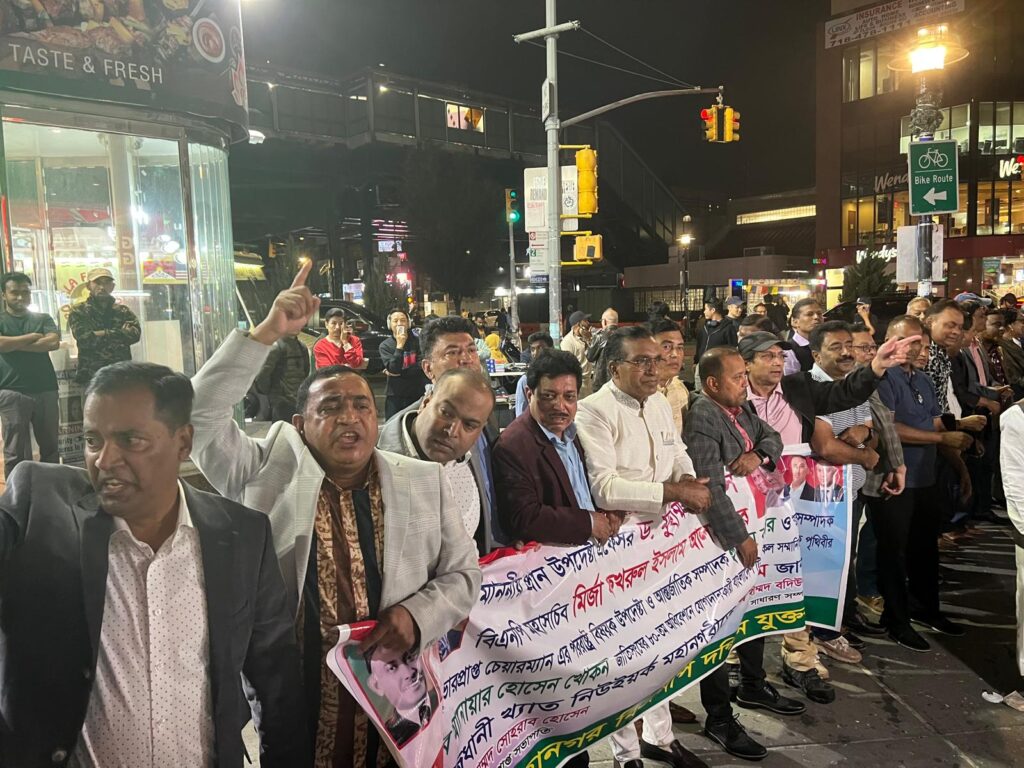
Analysts believe the US BNP could play a crucial role not only among expatriates but also in influencing Bangladesh’s broader political landscape. With many expatriates motivated by patriotism, the organization has the potential to strengthen BNP’s image internationally, counter government narratives, advocate for democracy and human rights, and expand political communication. Many party activists now insist that forming a strong, unified, and effective central committee is a matter of urgency.
Currently, the BNP has committees in 19 US states, but the absence of a central leadership has led to coordination gaps and decision-making deadlocks among state units. As a result, the US BNP’s overall organizational activities remain largely stagnant. However, leaders have expressed optimism that a full-fledged committee will be formed soon.
BNP Central Executive Committee Member Giyas Ahmed said that during the early years, the US BNP had only 10–12 state committees, but the number has now grown to 19. “Acting Chairman Tarique Rahman has instructed us to form state committees and assigned Anwar Hossain Khokon to oversee the process. We informed Mr. Rahman in London that it’s time to form the US central committee. He agreed and said the central body would be formed after completing all state committees,” Ahmed stated.
He added, “There is a lack of coordination among the existing state committees. A central committee would help bring them together. The long absence of a central leadership has created organizational paralysis. Regular committee formation would also allow for new leadership to emerge.”
BNP Executive Committee Member Zillur Rahman Zillu said, “Work on forming state committees is nearly complete. Once that’s done, the structure and leadership of the US BNP will be finalized. I strongly believe forming a central committee is now essential. Many dedicated activists here deserve formal organizational recognition.”
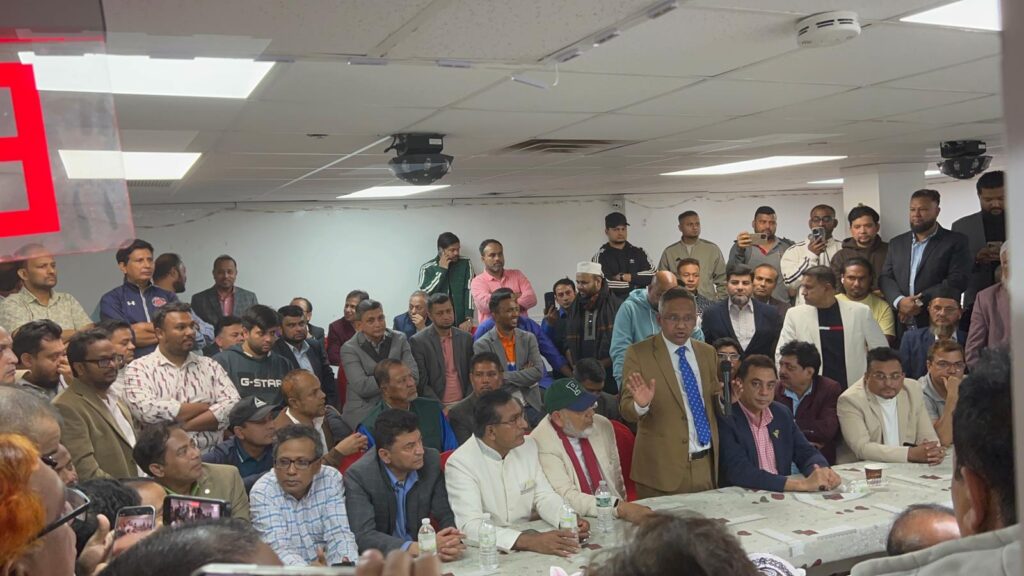
BNP leader and businessman Monirul Islam emphasized the need for a “strong, structured, and permanent” US BNP committee. He said, “The absence of a regular committee even creates confusion over who should receive central leaders when they visit. A stable committee would help restore unity.”
He further added, “Many senior and dedicated leaders have been involved in BNP politics in the US for years, but they remain sidelined due to the lack of a central committee — even though many of them are capable of leading.”
When asked why the US BNP’s committee has not been formed, Anwar Hossain Khokon, BNP’s International Affairs Secretary, sidestepped the question. He said, “I was assigned by the central leadership to form state committees, and I’ve done that. I haven’t received any directive regarding a US central committee. I will carry out whatever task the party assigns me. If they instruct me to form it tomorrow, I’ll do so tomorrow.”
When asked whether a US central committee is necessary, Khokon replied, “That’s a party decision; I have no personal opinion.”
Humayun Kabir, BNP’s International Foreign Affairs Adviser, also avoided commenting directly. He said, “The state committees are not outside the US; the country is too large to run without a state-based structure.” Asked whether a central committee is necessary, he said, “The only central committee is in Bangladesh. The US state committees operate under it.”
Despite internal divisions caused by the long absence of a central body, US BNP activists have shown rare unity during major events such as the recent United Nations General Assembly session in New York. When Chief Adviser Dr. Muhammad Yunus and senior BNP leaders attended, US BNP members jointly staged protests against alleged acts of sabotage by Awami League supporters in front of the UN and in Bangladeshi-populated neighborhoods.
Political analysts note that such enthusiasm and unity among activists even amid factional divides highlight the urgent need to form a strong, representative US BNP central committee to sustain organizational strength and political momentum.