US Appeals Court Rules Most of Trump’s Global Tariffs Illegal
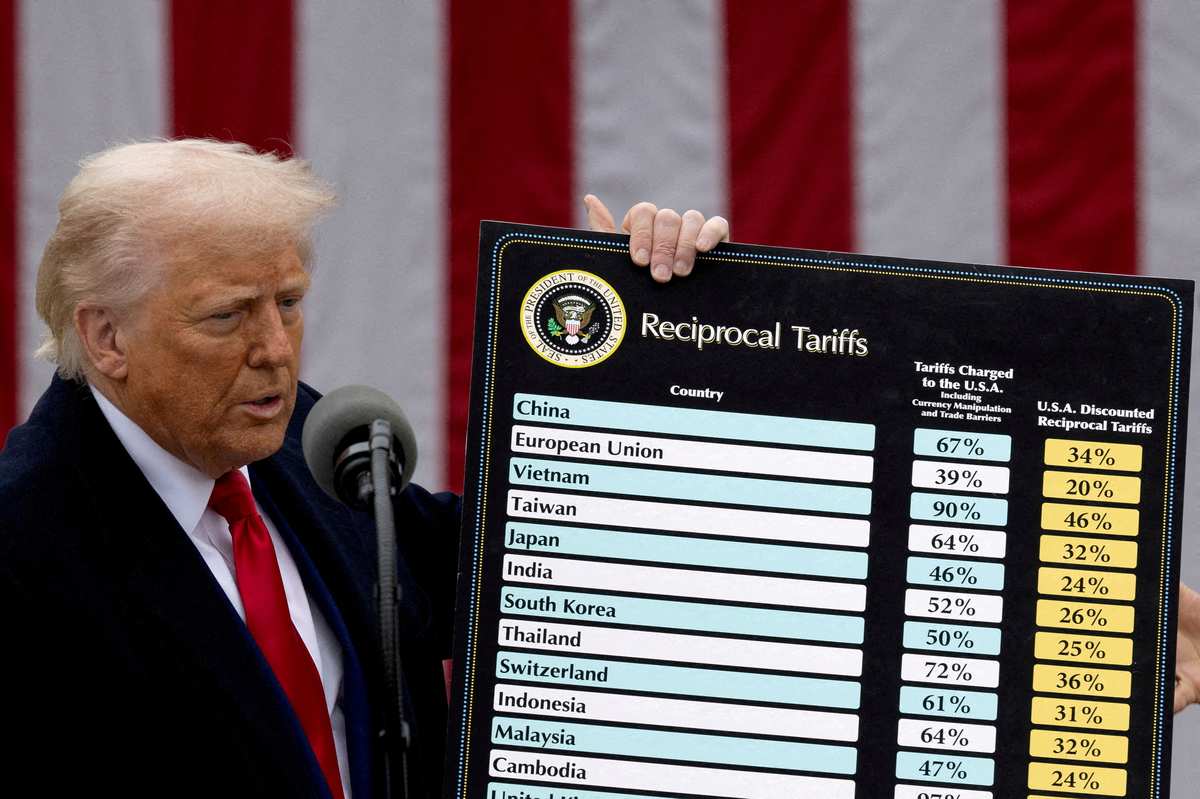
A US appeals court has ruled that the majority of tariffs imposed by former President Donald Trump are illegal, potentially setting up a high-stakes legal battle that could reshape his foreign policy legacy.
The decision affects Trump’s so-called “reciprocal” tariffs on most countries worldwide, as well as specific tariffs on China, Mexico, and Canada. In a 7-4 ruling, the US Court of Appeals for the Federal Circuit rejected Trump’s argument that the tariffs were authorized under the International Emergency Economic Powers Act (IEEPA), describing them as “invalid as contrary to law.”
The ruling will not take effect until 14 October, allowing time for the administration to appeal to the US Supreme Court.
Trump criticised the decision on Truth Social, warning that it would “literally destroy the United States of America” and claiming that removing the tariffs would make the country “financially weak.”
Under IEEPA, presidents can act against “unusual and extraordinary” threats, which Trump argued included trade imbalances affecting national security. However, the court found that setting tariffs is “a core Congressional power” and not within the president’s authority.
The 127-page judgment concluded that the 1977 law neither mentions tariffs nor provides clear procedural safeguards for such action, and Congress did not intend to grant the president unlimited tariff authority.
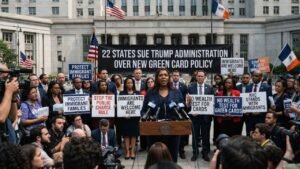
The ruling stems from lawsuits filed by small businesses and a coalition of US states after Trump’s April executive orders imposed a baseline 10% tariff on nearly all countries, alongside “reciprocal” tariffs aimed at correcting trade imbalances.
The appellate court also struck down tariffs on Canada, Mexico, and China, although other tariffs on steel and aluminium remain unaffected, as they were issued under separate presidential authority.
Lawyers for the White House had warned that invalidating the tariffs could trigger a “1929-style financial collapse,” potentially threatening the economy and national security.
The case is expected to head to the Supreme Court, which will consider whether Trump’s broad tariff programme represents presidential overreach or falls within lawful authority. With six Republican-appointed justices on the top court, including three appointed by Trump, the outcome remains uncertain.