Trump’s visa crackdown hits Indian students’ ambitions

Paridhi Upadhaya had been preparing to leave for the U.S. after earning a scholarship in computer science. However, her family in Lucknow, India, decided to cancel the plan last week following news of President Donald Trump’s crackdown on H-1B visas.
“Trump’s unending onslaught against immigrants is forcing us to consider other destinations for her,” the 18-year-old’s father Rudar Pratap said.
Upadhaya is among thousands of Indians for whom the American dream of world-class education, lucrative careers, better quality of life and social mobility, is turning sour due to rising U.S. visa restrictions and policy unpredictability.
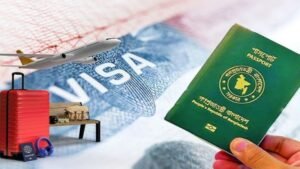
For decades, the H-1B visa has been the gateway to a new life: a chance for young engineers and scientists from India, China and other countries to turn years of study into high-paying jobs and the possibility of permanent residency.
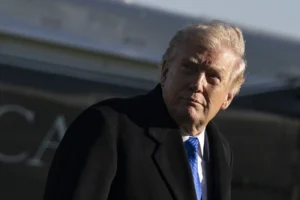
But last week, Trump said new H-1B visa applications would cost $100,000, up from the roughly $2,000 to $5,000 employers were paying to sponsor workers.
Over 13,000 kilometres (8,000 miles) from Lucknow in Dallas, Texas, an Indian student pursuing a master’s degree in computer science is staring at $80,000 in debt and an uncertain future.
“Right now, the only aim is to finish my degree, find an internship, and try to recover my debt,” said the student, who asked not to be named for fear of being targeted by immigration officials.
“I’ll move to Canada or Europe — anywhere that actually wants us.”
H-1b visa: Gateway now closing?
While supporters credit H-1B visas with bringing in vital talent, Trump argues it suppresses wages and sidelines qualified U.S. workers, making it one of the country’s most divisive immigration policies.
Some of the high-profile Indians who used the program include Microsoft (MSFT.O), opens new tab CEO Satya Nadella, IBM (IBM.N), opens new tab CEO Arvind Krishna and Google parent Alphabet (GOOGL.O), opens new tab CEO Sundar Pichai, all of whom arrived in the U.S. as students.
India was by far the largest beneficiary of H-1B visas last year, accounting for 71% of approved beneficiaries, while China was a distant second at 11.7%, U.S. government data showed.
The H-1B visa, typically issued for three years and renewable for another three, has enabled U.S. tech firms to hire millions of skilled foreign workers to fill talent gaps.
Foreign students who graduate from U.S. universities often use the Optional Practical Training program to get work experience and then obtain the H-1B. The visa has become the key bridge to long-term employment and, for many, permanent residency – the coveted Green Card.
But young Indians are now rethinking their plans to pursue higher studies and careers in the U.S. and scoping other immigrant-friendly destinations, education consultants, professors and students told Reuters.
“Many students and parents are now in ‘wait and watch’ mode, weighing options like the UK, Australia, Ireland, and New Zealand,” said Piyush Kumar of IDP Education.
The U.S. hosted 465,000 Indian students in 2023, the most among 1.3 million abroad, followed by Canada, the UK and Australia, Indian government data showed.
“Students are asking for a Plan B upfront because return on investment matters,” Patlolla Bharath Reddy, managing partner at Uni Planet Overseas Education, said.
Others are urging students to look at the longer term.
“We’ve been reassuring them that the order may face legal hurdles and things could change by the time they graduate,” said KP Singh of overseas education consultancy IMFS.