Trump Raises H-1B Visa Fee to $100,000 per Year
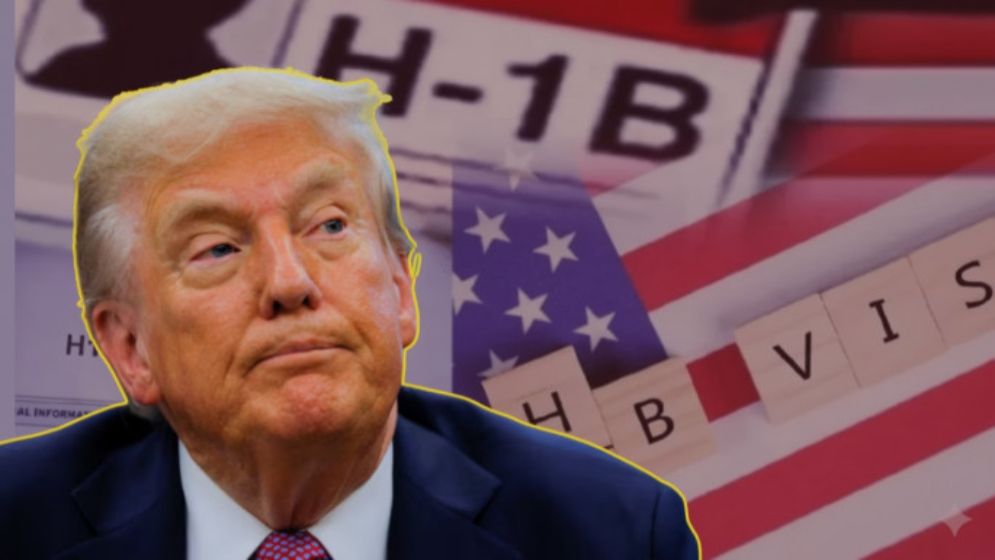
U.S. President Donald Trump has issued a new proclamation increasing the H-1B visa application fee to $100,000 per year. This executive order, signed on Friday, could significantly impact the U.S. technology sector, which relies heavily on hiring skilled foreign workers. The change directly affects IT professionals from South Asia, particularly India and China, who have historically been the largest beneficiaries of this visa.
The H-1B visa allows U.S. companies to hire highly skilled foreign employees. Under the new rule, companies must pay $100,000 annually for each H-1B visa. U.S. Secretary of Commerce Howard Lutnick said that previously companies used these visas to bring in foreign workers for training, but now they will be required to train and hire American workers instead.
White House Staff Secretary Will Scarf stated that the proclamation ensures that only highly skilled foreign workers, who cannot be easily replaced by Americans, will qualify. He criticized the H-1B visa system as one of the most widely misused visa programs.
The Trump administration noted that some companies had previously used H-1B visas to reduce wages for American workers. From 2000 to 2019, the number of STEM (Science, Technology, Engineering, and Mathematics) foreign workers in the U.S. doubled to 2.5 million, while overall STEM employment increased by only 44 percent.
Critics warn that the steep fee could hinder the U.S.’s ability to attract top global talent. DD Das, partner at venture capital firm Menlo Ventures, said, “This could severely affect American innovation and economic growth.” Analysts add that while large companies may manage the costs, smaller tech firms and startups could face serious challenges, potentially outsourcing high-value work abroad.
Market reactions have already been negative. Shares of IT service company Cognizant fell by up to 5 percent, while Indian-listed companies Infosys and Wipro saw stock declines of 2–5 percent.
Legal experts have also questioned the validity of the fee hike. Aaron Reicklin-Melnik of the American Immigration Council said that Congress only authorized fees to cover application processing costs, and charging beyond that may be unlawful.
Currently, 65,000 H-1B visas are issued annually, with an additional 20,000 for advanced-degree holders. Participation in the lottery requires a nominal fee, but companies must pay thousands of dollars upon approval. Visas are generally valid for three to six years, with all fees borne by the employing company.
On the same day, President Trump also introduced the “Gold Card” visa, allowing anyone who invests $1 million to obtain permanent U.S. residency.