Small Businesses in New York Struggle with Soaring Insurance Costs
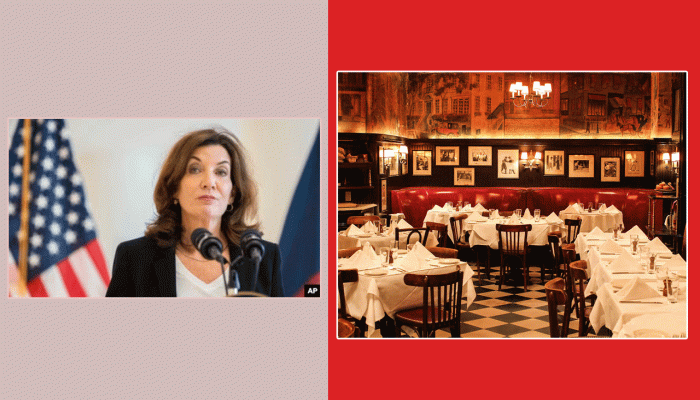
Small business owners across New York City—from the Bronx to Brooklyn, Queens to Harlem—are uniting to protest the rapidly rising auto insurance premiums, which they say now threaten their very survival. They have called on Governor Kathy Hochul to take urgent action to ease the burden.
Over 30 small businesses, including bodegas, laundries, auto repair shops, salons, restaurants, and family-run operations, have jointly sent letters to Governor Hochul, as well as to Senate Majority Leader Andrea Stewart-Cousins and Assembly Speaker Carl Heastie.
The letter highlights that auto insurance premiums have increased 50–100% since 2021, creating a significant financial strain for small businesses. For many owners, insurance premiums are the second-largest expense after employee wages.
Businesses representing diverse communities have joined the initiative, including:
- Chinese-owned kitchens and cabinet shops in Flushing
- Bangladeshi and South Asian businesses in Ozone Park
- Black-owned shops in Bed-Stuy and Crown Heights, Brooklyn
- Latino service businesses in the Bronx and Queens
They emphasize that vehicles are essential to their operations—delivery vans, contractor trucks, and service vehicles are often vital for business survival. Yet, abnormally high auto insurance costs are hindering their economic growth.
Experts note that auto insurance fraud in New York has increased by around 80% in the last five years, adding an average of $300 per resident to premiums, effectively acting as a hidden tax on individuals and businesses. The average full-coverage auto premium in New York now stands at $4,031, roughly $1,600 above the national average, forcing some small businesses to cut staff or raise prices to cope.
Business owners have expressed support for Governor Hochul’s proposed plan, which aims to curb insurance fraud, legal abuse, and false accident claims. Proposed measures include:
- Strengthening law enforcement powers against insurance fraud
- Providing additional investigative resources to district attorneys and state police
- Implementing harsher penalties for organized fraud rings
- Extending investigation periods for suspicious claims
- Setting limits on compensation for individuals involved in staged accidents
They also insist that any savings from these reforms should benefit consumers and small businesses directly, rather than increasing insurance company profits.
The initiative has received backing from civic groups such as the Coalition for Affordable Services, whose spokesperson José Baiona stressed that small businesses are the backbone of New York’s local economy, providing jobs, investment, and community vitality—but excessive insurance costs now place unreasonable pressure on them.
Business owners warn that without immediate legislative action, many small businesses may be forced to close, putting further strain on the city’s economy.