Pentagon Warns US Carriers Vulnerable to China as Island Strategy Expands
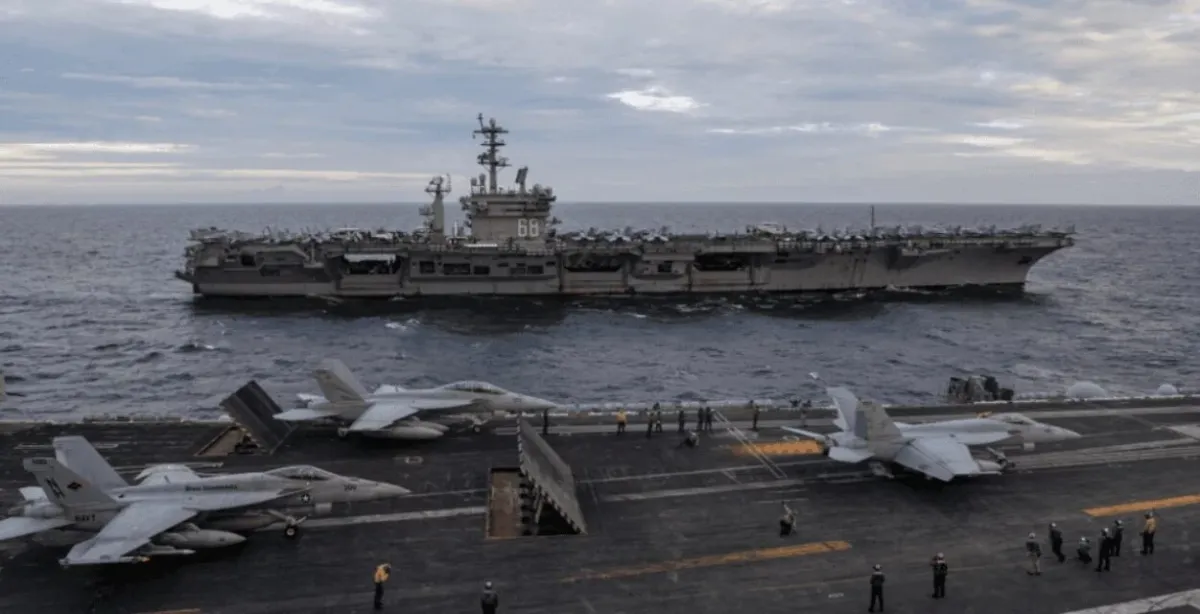
A leaked Pentagon assessment warns that US aircraft carriers are increasingly at risk from China’s long‑range missile and drone capabilities. The report, circulated earlier this year and reported by multiple news outlets, highlights growing threats in the Indo‑Pacific region as Beijing develops hypersonic weapons capable of striking US naval forces at greater distances.
The document emphasizes that China’s expanding arsenal could endanger US carriers in a first strike scenario, raising concerns among military planners about the survivability of these assets in a potential conflict. Pentagon officials describe the threat as “serious and sustained,” reflecting China’s rapid missile and drone deployment.
In response, the United States is expanding its so-called “island strategy,” upgrading airfields and military facilities across the western Pacific. Key locations include Tinian, Palau, Yap, the Philippines, and Australia’s Cocos Islands. These sites act as dispersed launch points for aircraft and serve as fortified positions, sometimes referred to by defense planners as “unsinkable carriers.”
The strategy aims to counter China’s A2/AD (anti-access/area denial) system, which seeks to limit US operations near China’s coast. By spreading forces across multiple islands, the US hopes to reduce the risk of a single crippling strike, maintain operational flexibility, and complicate Chinese targeting efforts.
Upgrades also strengthen cooperation with regional allies. The Philippines receives joint facilities, Palau and Yap gain modern runways, and Australia enhances interoperability with US forces. Analysts say the expanded network is designed both to protect US assets and reassure partners of a continued American presence in the western Pacific.
While some regional nations view the expansion positively, others warn it could heighten tensions. The Pentagon emphasizes that the initiative is defensive, aimed at safeguarding US forces to maintain stability. Experts expect further expansion in 2026, with the full network intended to be operational before any major crisis.
The leak underscores how China’s missile advancements are reshaping US military planning in Asia and signals that the island strategy will remain a central element of Indo‑Pacific security for years to come.