Nor’easter Batters US Northeast, Leaving More Than 130,000 Without Power
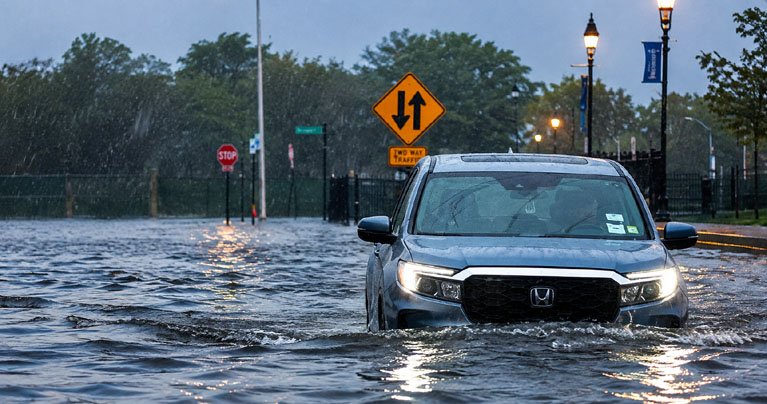
A powerful early-season nor’easter battered the U.S. Northeast with heavy rain, strong winds and coastal flooding, leaving more than 130,000 customers without electricity and disrupting hundreds of flights.
The storm affected major cities including New York, Boston and Philadelphia, while coastal communities faced flooding and large waves. At least one person was killed after a tree fell during the storm, according to local reports.
The National Weather Service said Sunday that the storm was beginning to weaken. However, additional rain and coastal flooding remained possible across parts of the Northeast. The New York office issued a coastal flood advisory for Sept. 28 and said the system would continue moving northeast before pulling away by Tuesday.
Wind gusts reached damaging levels in parts of the region, while flooding affected low-lying coastal areas. Long Island and New Jersey communities reported downed trees, damaged property and power outages.
Air travel was also disrupted. More than 500 flights were canceled and thousands more delayed across the country as the storm affected airports and transportation networks in the Northeast.
The storm also caused significant coastal damage in parts of the region. In North Carolina, sections of Highway 12 were damaged by water, temporarily cutting off access to some coastal communities.
Unlike hurricanes, which typically draw energy from warm tropical waters, nor’easters are large-scale storms that develop from interactions between cold and warm air masses along the East Coast. They can produce heavy rain, strong winds, coastal flooding and, in colder conditions, snow.
Weather officials said the storm was expected to gradually move away from the Northeast, although lingering rain and coastal flooding could continue in parts of New England and the Mid-Atlantic.