Millions in Arab, Muslim countries face hunger crisis: UN
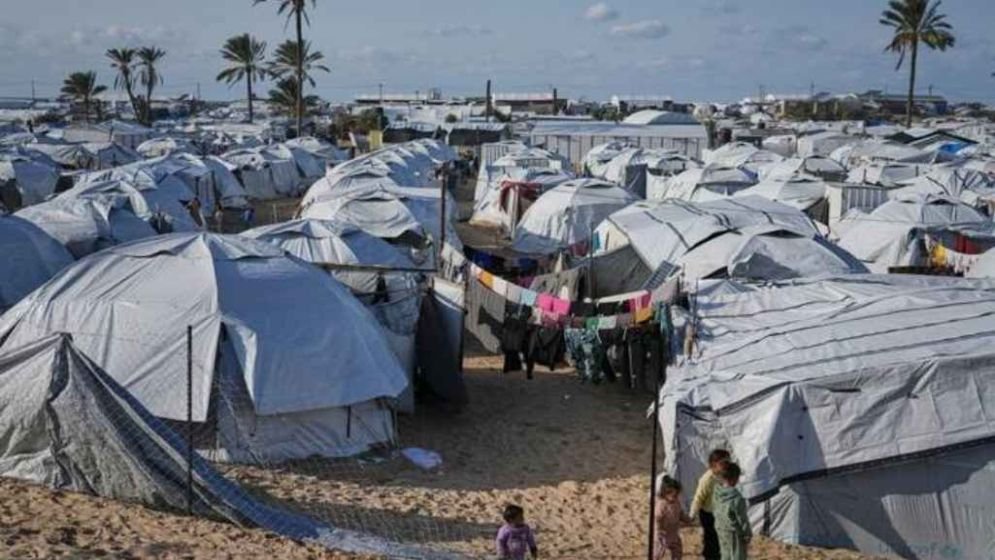
Acute food insecurity is expected to worsen for millions of people across an array of Arab and Muslim countries, a new report by two UN bodies has warned.
The Hunger Hotspots report by the World Food Programme and Food and Agriculture Organization highlighted Palestine, Yemen and Sudan as among the most at-risk countries, where elevated levels of starvation and death will likely occur.
Conflict, economic shocks, climate and natural disasters represent the central drivers of food insecurity worldwide, the report found.
Speaking via video link on Wednesday to the press at UN headquarters in New York City, two officials from the UN bodies outlined the report’s most alarming findings.
Jean-Martin Bauer, director of WFP’s Food Security and Nutrition Analysis Service, said: “Conflict and violence remains the primary driver (of food insecurity), and that’s the case for 12 of the 13 hotspots identified in this report.
“Every hotspot of highest concern is a place affected by conflict and violence, and conflict destroys livelihoods. It forces people to leave. It disrupts markets, damages infrastructure and restricts humanitarian access.”
The biannual report grades hotspots on levels of concern. Lebanon — for the first time — was included as a hotspot that “require close monitoring and urgent action as the situation could deteriorate during the outlook period,” Bauer said.
The country has suffered mass internal displacement and surging food prices amid economic turmoil and a conflict raging in the south.
“It’s important to note that when displacement occurs, the folks that are most affected are those who have been forced to flee their homes. And this is happening at a time of great pressure on local markets, and with attention also on the exchange rates and the macro economy,” Bauer told Arab News.
“When we have access, we’re able to deliver, we’re able to reach the most vulnerable population within Lebanon, and therefore assistance and funding to the agencies, FAO or WFP, would help alleviate the situation,” he added.
“That’s what we’ve seen in the past. We’re able to coordinate with our partners on the ground to get through. But there has been an uptick in vulnerability, definitely, in Lebanon in the past few weeks.”
The report highlights four hotspots — Sudan, South Sudan, Gaza and Somalia — at risk of famine this year, in what Bauer described as the “most alarming finding.”
Though the food-security situation has improved in Gaza since last October due to the ceasefire, circumstances “remain extremely fragile,” he said.
The report’s central message “is clear that these crises are foreseeable, they’re predictable and the worst outcomes can be prevented, but the window to act is narrowing,” Bauer added.
Rein Paulsen, director of FAO’s Office of Emergencies and Resilience, said the ability of his agency, WFP and partner organizations “is being severely constrained.”
He added: “Humanitarian funding for food-security sectors has fallen sharply, and there’s an important data point here. When it comes to funding for food-security activities, those funding levels in 2025 dropped to a level that was last seen in the period 2016 and 2017.”
Since then, however, the share of the global population judged as being in acute and high food insecurity has doubled, Paulsen said.
That figure, coupled with funding cuts, is “forcing extremely difficult choices,” he added. “We’re having to make cuts to assessments, cuts to our monitoring and analytical capabilities, all of which are weakening the evidence base that’s needed precisely to be able to prioritize assistance and to guide our decision making.”
The war on Iran and subsequent blockade of the Strait of Hormuz — preventing a sizable share of global energy and fertilizer supply from reaching world markets — has proved a significant driver of food insecurity, Paulsen said, highlighting the effect on regions already facing acute shortages.
“Almost one-quarter of global oil supplies and roughly one-third of global fertilizer trade passes through the Strait of Hormuz. Disruptions in this corridor therefore represent a major risk for global food, energy and input markets,” he added.
“Higher fuel prices, rising fertilizer costs, increased transportation costs, increased insurance costs and global supply chain disruptions — all of these things can quickly translate into higher food prices.
“They can also delay the provision of humanitarian assistance and / or make humanitarian operations even more expensive.”
Middle Eastern countries and territories listed in the report — such as Sudan, Palestine, Lebanon, Yemen and the Syrian Arab Republic — are “particularly vulnerable because of impacts on domestic food production, economic shocks and humanitarian funding cuts,” Paulsen said, calling for food insecurity to remain high on the global political agenda.
“These crises require political commitment, humanitarian diplomacy, coordinated action across humanitarian development and also peace efforts,” he said.
“The worst outcomes that you see described in this report aren’t inevitable. They’re foreseeable, and therefore they’re preventable.
“But the window to act is narrowing, which is why the issuance of this report and action in response to it are so important.”