Meet Sudan Gurung, the DJ who rocked the Nepal govt
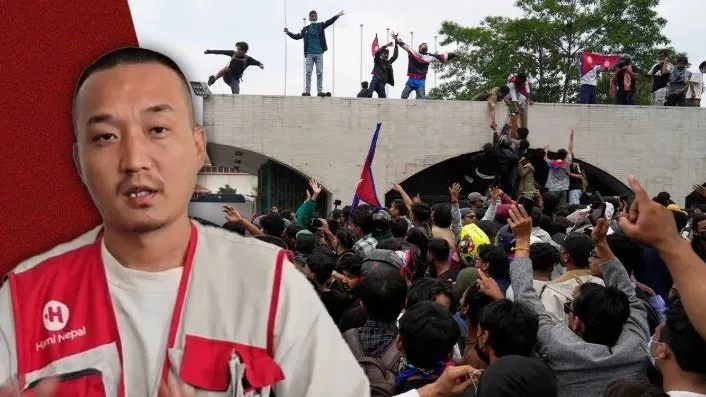
The streets of Kathmandu turned into a battleground this week. Curfews emptied entire neighbourhoods, students fought with riot police and tear gas entered hospital rooms. The administration was thrown into a crisis, hundreds were hurt, and at least 19 people died.
The current uprising erupted after the government imposed the Directives for Managing the Use of Social Networks, 2023, demanding that platforms such as Facebook, Instagram, WhatsApp, YouTube, and X register locally within a week. Collected photo
One name stood in the middle of it all. Gurung Sudan. Gurung, 36, does not pursue a career in politics. He was a local businessman before becoming the president of Hami Nepal, a youth-led NGO that has made him a representation of a restless generation.
Once a DJ and owner of the nightclub OMG, Gurung’s life was drastically changed by the horrific 2015 earthquake that killed about 9,000 people, according to The Annapurna Express. Following it, he mobilised about 200 volunteers for relief efforts via social media, which was the catalyst for his subsequent civic activity.
Hami Nepal began as a grassroots relief effort and has since expanded into a larger platform for disaster response, social engagement, and post-earthquake rehabilitation. Additionally, the group mobilised during the coronavirus outbreak in 2019 and delivered supplies to Turkey after the earthquake.
The current uprising erupted after the government imposed the Directives for Managing the Use of Social Networks, 2023, demanding that platforms such as Facebook, Instagram, WhatsApp, YouTube, and X register locally within a week.
When companies failed to comply, the Ministry of Communication and Information Technology shut down 26 platforms by September 4, reports the Economic Times.
For a generation that organises friendships, work, education, and activism online, the ban felt less like regulation and more like censorship.
Nearly 43 percent of Nepal’s population is between 15 and 40, yet unemployment hovers around 10 percent, and the World Bank estimates GDP per capita at $1,447. Watching the children of political elites flaunt wealth online only sharpened feelings of frustration and betrayal.
Hami Nepal moved quickly. Using Instagram and Discord before the blackout, Gurung’s team called for rallies at Maitighar Mandala on September 8, circulating videos instructing participants on peaceful protest.
As per reports, students were urged to carry books and wear their uniforms as a symbol of resistance.
Even when the platforms went dark, young Nepalis coordinated through VPNs and encrypted apps. Hashtags like #UnbanSocialMedia and #NepoKid went viral, spotlighting politicians’ children and their perceived privileges.
“Nepo kids show off their lifestyle on Instagram and TikTok but never explain where the money comes from,” one viral post noted, according to BBC. For many youths, the protests became a stage to challenge corruption, nepotism, and systemic inequality — grievances that had been simmering for years.
By September 8, thousands had gathered, eventually breaching barricades and storming Parliament. Security forces responded with water cannons, rubber bullets, and live ammunition. “We used minimum force,” a police officer claimed, yet trauma wards overflowed.
At least 19 people died, hundreds were injured, and the government was forced into a crisis.
Curfews spread across Kathmandu, Pokhara, Butwal, and Bhairahawa. Even Prime Minister KP Sharma Oli’s residence in Damak came under attack, with stones hurled and nearby homes set ablaze.
The streets remained defiant, with protesters chanting “Don’t kill students” and “KP chor, desh chhod” (“KP is a thief, quit the country”), undeterred by curfews or police gunfire.