Khaleda Zia Passes Away, Marking the End of an Era in Bangladesh Politics
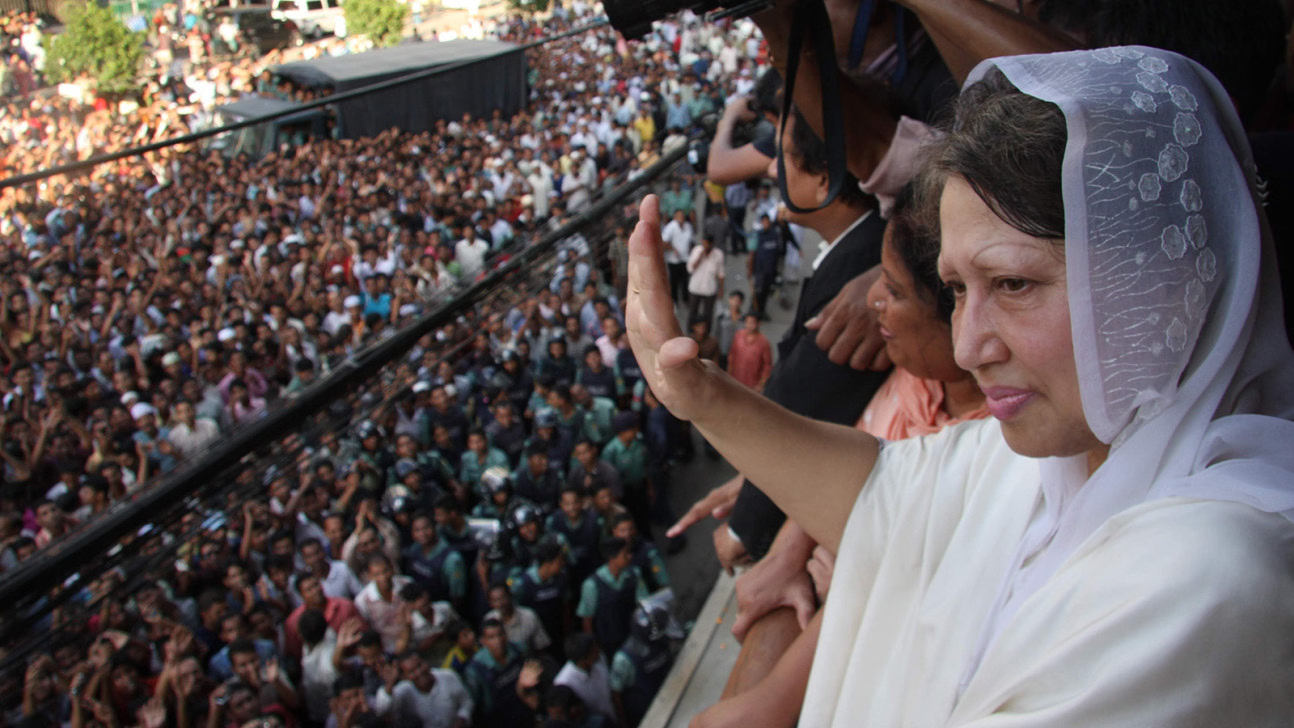
Khaleda Zia, chairperson of the Bangladesh Nationalist Party (BNP) and three-time former prime minister, passed away at 6 a.m. on Tuesday at the age of 80. She had been a dominant figure in Bangladesh politics for over four decades, serving as the country’s first female prime minister and shaping much of its post-independence political landscape.
Born in 1945 in Jalpaiguri, India, Khaleda Zia spent her early life in Dinajpur before marrying then-Pakistan Army officer Ziaur Rahman. She entered politics following her husband’s assassination in 1981 and became BNP chairperson in 1984. Her leadership played a central role in the movement against military rule in the 1980s and in restoring parliamentary democracy.
Khaleda Zia served as prime minister for three terms: 1991–1996, briefly in 1996, and 2001–2006. She contested 23 parliamentary seats over five elections, winning all, a record in Bangladesh’s history. Her later years were marked by legal battles, including convictions in the Zia Charitable Trust case, though she was on bail under an executive order at the time of her death.
Her passing has cast a shadow over Bangladesh’s political scene, as supporters view her as a symbol of democratic struggle and resilience, while critics highlight controversies during her tenure. Khaleda Zia’s life and career reflect the country’s turbulent journey through liberation, military rule, and democratic governance, marking the end of a significant chapter in Bangladeshi politics.