Israel, Nuclear Disputes and Hormuz Risks Could Derail U.S.-Iran Agreement
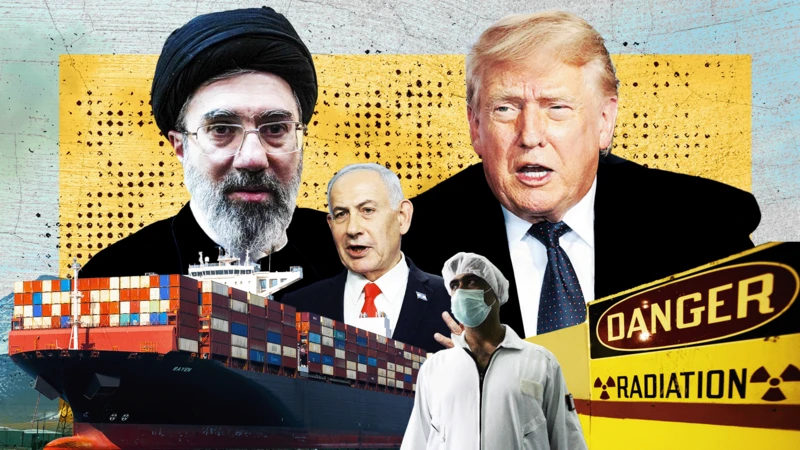
A preliminary agreement between the United States and Iran aimed at ending weeks of conflict and easing regional tensions faces significant obstacles, with analysts warning that disagreements over Israel’s military actions, Iran’s nuclear program, and the future of the Strait of Hormuz could undermine the fragile deal.
The two countries recently reached a 14-point memorandum of understanding after weeks of negotiations. U.S. President Donald Trump and Iranian President Masoud Pezeshkian have both signed the agreement, paving the way for discussions on a final settlement within the next 60 days.
The memorandum includes commitments to gradually lift the U.S. naval blockade, reopen shipping through the Strait of Hormuz, begin discussions on removing sanctions against Iran, and establish a reconstruction and economic development fund worth at least $300 billion. Iran has also reaffirmed that it does not seek to develop nuclear weapons.
Despite the breakthrough, Trump cautioned that the agreement remains preliminary and warned that military action could resume if the process collapses.
Israeli Operations in Lebanon Remain a Major Concern
One of the most immediate threats to the agreement is the ongoing conflict involving Israel and Lebanon.
While the memorandum calls for an immediate and permanent halt to military operations across all fronts, including Lebanon, Israeli forces have continued conducting strikes in southern Lebanon. Israeli officials have also indicated that troop withdrawals from Lebanese territory are not a condition of the agreement and have emphasized Israel’s right to self-defense.
Iran, however, argues that ending the war in Lebanon is an essential component of any broader regional settlement. The Iran-backed Hezbollah movement has echoed this position, insisting that Israeli forces must fully withdraw from Lebanese territory.
Political analyst Dr. H.A. Hellyer of the Royal United Services Institute described Israeli military operations as the single greatest threat to diplomatic progress, warning that any direct confrontation between Israel and Iran could derail negotiations before substantive discussions begin.
Uncertainty Over Iran’s Nuclear Program
Another major challenge concerns Iran’s stockpile of enriched uranium.
According to the International Atomic Energy Agency (IAEA), Iran has accumulated approximately 400 kilograms of uranium enriched to 60 percent purity. Weapons-grade uranium typically requires enrichment levels of around 90 percent.
Although Iran continues to maintain that its nuclear program is peaceful and has reiterated that it will not pursue nuclear weapons, key questions remain unresolved regarding the future management of its existing enriched uranium stockpiles.
Under the preliminary framework, both sides have agreed in principle that the material will be diluted under IAEA supervision. However, the specifics are expected to be negotiated during talks on a final agreement.
Former Pentagon official Darin Selnick warned that any indication Iran is moving toward weapons-grade enrichment could prompt the United States to consider renewed military action.
Strait of Hormuz Reopening Faces Practical Challenges
The agreement also seeks to reopen the Strait of Hormuz, a critical maritime corridor through which roughly 20 percent of the world’s oil and gas supplies moved before the conflict disrupted shipping.
The waterway is expected to reopen following the formal signing of the agreement, with full operations potentially resuming within 30 days. However, experts caution that security concerns, including the removal of naval mines, could delay the process.
Questions also remain regarding Iran’s proposal to charge service fees for vessels transiting the strait. While international law generally prohibits tolls on transit passage, certain service-related charges may be permitted.
U.S. officials have expressed confidence that the strait will remain toll-free, arguing that Gulf states are unlikely to accept any arrangement restricting free navigation.
Retired U.S. Rear Admiral Mark Montgomery said mine-clearing operations alone could take weeks or even months, while maritime security experts believe shipping companies will remain cautious until they are convinced the ceasefire is durable.
Final Agreement Still Far Away
Although the memorandum marks a significant diplomatic breakthrough, experts stress that it serves only as a framework for future negotiations rather than a final peace settlement.
“The hard work has not even begun,” Hellyer said, noting that major political, military and technical disputes must still be resolved before a lasting agreement can be secured.
The coming 60 days of negotiations are expected to determine whether the U.S.-Iran understanding evolves into a durable peace deal or collapses under the weight of regional tensions.