Iran Retaliates Against US Military Bases in Jordan After First US Strikes in a Month
Iran has launched retaliatory attacks against US military targets in the Middle East after American forces carried out their first strikes on Iranian territory in a month, triggering a fresh escalation in the six-month-old conflict.
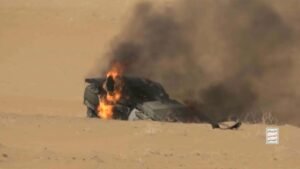
Iran’s Islamic Revolutionary Guard Corps (IRGC) said it launched ballistic missiles at two US military bases in Jordan, claiming the attacks caused “heavy damage.” Jordan’s armed forces said they intercepted eight missiles that entered the country’s airspace.
Iran also claimed it targeted US military personnel at an air base in the United Arab Emirates and shot down a US drone over the Strait of Hormuz. The UAE, however, said its air force responded to a drone approaching its territorial waters and rejected Iranian claims that the Al Minhad air base had been attacked.
The Iranian retaliation came after the United States said Sunday that it had struck two Iranian rocket launchers on Larak Island in the Strait of Hormuz.
The US Central Command said the operation was a “limited, precise action” against IRGC forces that posed an imminent threat by preparing to deploy sea mines in the strategic waterway.
Iran condemned the US strikes, saying they resulted in military and civilian casualties. Iranian President Masoud Pezeshkian said Tehran was “not seeking war” but would deliver a decisive response to any aggression.
The latest exchange of attacks marks the first major military escalation between the two sides since late July, when the US last struck Iran. The renewed violence comes as diplomatic efforts to end the conflict have lost momentum.
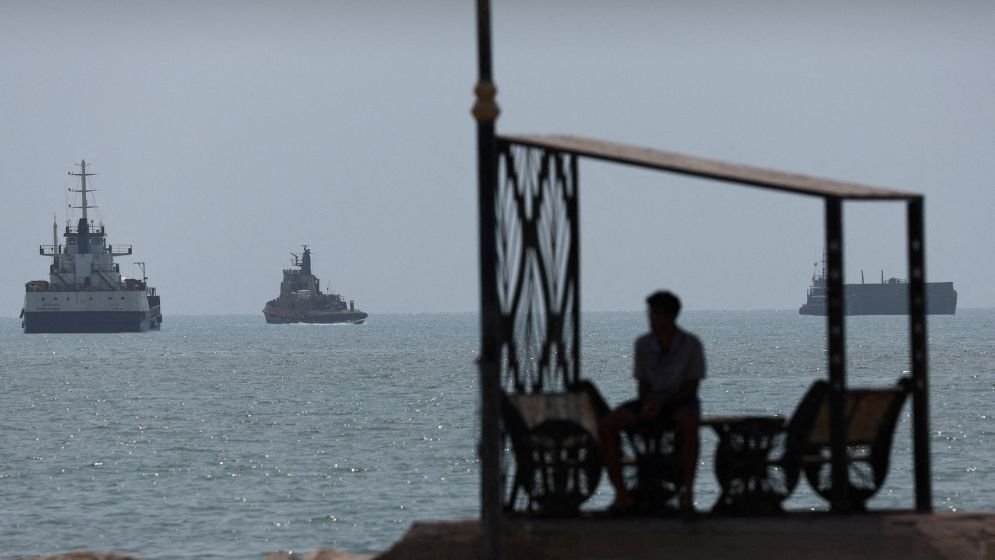
The Strait of Hormuz remains at the center of the confrontation. The strategic waterway carries a significant share of global oil supplies, and disruptions have already contributed to higher energy prices and shortages of fuel and fertilizer.
Oil prices rose following the latest US-Iran exchange, with Brent crude climbing above $90 a barrel and West Texas Intermediate rising above $85.
Diplomatic efforts led by countries including Pakistan and Qatar have continued for months. A ceasefire was reached in April and a memorandum of understanding toward a final peace agreement was signed in June, but no lasting settlement has been reached.
The conflict has become increasingly unpopular in the United States, with the November midterm elections approaching. Democratic Senator Jack Reed, the top Democrat on the Senate Armed Services Committee, criticized President Donald Trump’s handling of the war, saying that six months into the conflict, its objectives had not been achieved.
The latest attacks have raised renewed concerns that the conflict could spread further across the Middle East and place additional pressure on global energy markets.