Hilsa Remains Scarce Despite Peak Season
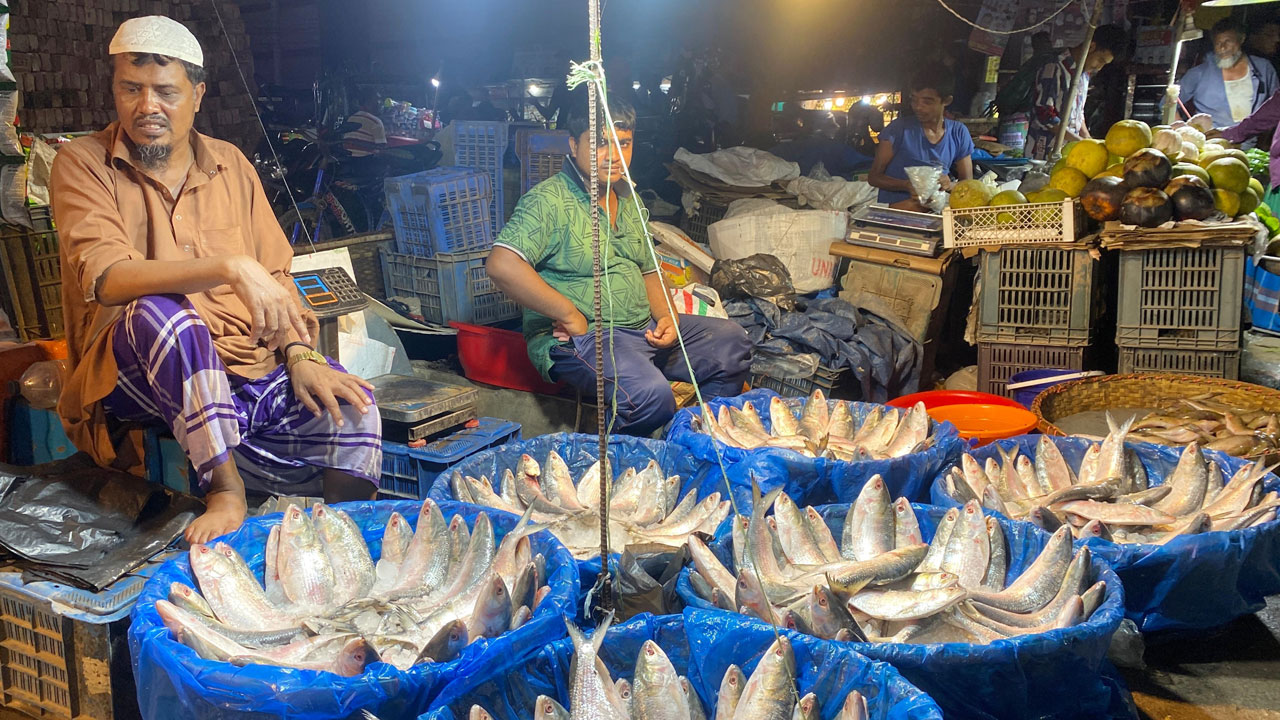
The silver hilsa is cherished as the most beloved fish of Bengalis. Traditionally, the month of Bhadra is considered the peak season for hilsa, when rivers, markets, and households are expected to overflow with abundance. But this year, expectations have dimmed. Even in peak season, supply in the markets has fallen short, driving prices to record highs.
Fishermen complain that despite sufficient water levels in rivers, their nets are coming up nearly empty. Some blame the lack of strong currents, unfavorable weather, and an increasing number of trawlers crowding the rivers, leading to fierce competition. The same scenario is being reported in the Meghna, Padma, Tetulia, Ichamati, and Shitalakshya rivers. Many fishermen are returning home empty-handed after long days of labor.
Consumers, meanwhile, are frustrated. The few hilsa available in markets are priced beyond reach medium-sized fish are selling for Tk 1,500 to 2,000 per kilo, placing them out of the middle-class household’s budget.
Experts point to unchecked catching of spawning hilsa, river encroachment and pollution, and the adverse impacts of climate change as major threats to reproduction. They note that the destruction of river ecosystems has disrupted the natural movement of the fish. While the government enforces seasonal bans on fishing during spawning periods, irregularities, negligence, and the use of illegal nets remain persistent problems.
Government officials insist that initiatives are underway to boost production, including subsidies for fishermen, crackdowns on jatka (juvenile hilsa) catching, and stricter monitoring during breeding seasons. But local fishermen and traders question how effective these measures really are on the ground.
As a result, hilsa remains elusive even in its prime season. Ordinary people now can only look at the markets with a sigh their “silver dream” still out of reach.