EU Observers: Bangladesh’s 2026 Elections Credible but Reforms and Inclusion Needed
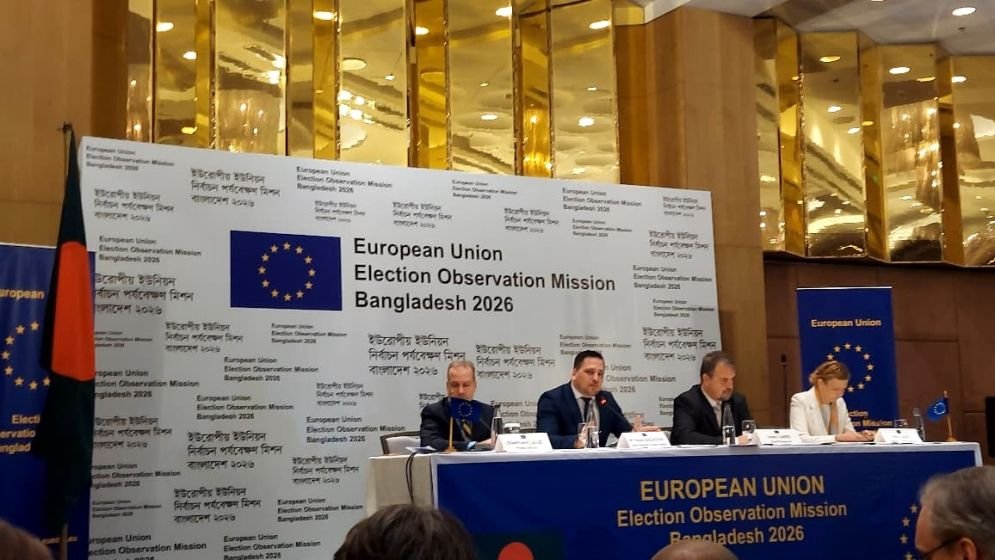
The European Union Election Observation Mission (EU EOM) has described Bangladesh’s 2026 parliamentary elections as credible and competently managed, calling them a significant step toward restoring democratic governance and the rule of law.
Presenting preliminary findings in Dhaka, the mission noted that, for the first time since 2008, elections in Bangladesh were genuinely competitive. The polls were conducted under a legal framework aligned with international standards, with fundamental freedoms largely respected.
However, EU observers highlighted sporadic localised political violence and the spread of manipulated online content, which harmed the democratic process. They also expressed concern over limited political space for women, which significantly reduced female participation in the elections.
The mission praised the Election Commission for working independently and transparently, maintaining stakeholder confidence and upholding electoral integrity. Around 770,000 overseas voters were enfranchised, more than 850,000 polling staff were trained, and election materials were distributed efficiently. Despite generally smooth polling and counting, some procedural safeguards were inconsistently applied, and not all polling stations were accessible to voters with reduced mobility.
EU observers underscored the competitive nature of the elections, noting that over 200 candidates contested, and two-thirds of initially rejected nominations were reinstated. Campaigns were largely free, though rhetoric intensified towards the end, with personal attacks and online disinformation affecting public debate.
Women’s participation remained low, with only 4% of candidates being female. Barriers cited included patriarchy, discrimination, digital harassment, and character attacks. Minorities and indigenous communities also reported feelings of political marginalisation.
The mission recorded at least 56 election-related violent incidents, causing around 100 casualties, and warned that any form of physical or digital violence has no place in democratic elections. Social media was identified as a key source of polarisation and misinformation, though national fact-checking initiatives were effective in countering false narratives.
The EU mission praised civil society and independent media for their role in monitoring elections, providing balanced coverage, and promoting voter education, noting that these efforts help build confidence in Bangladesh’s democratic process.
The EU concluded that while the elections were credible, further reforms are necessary to ensure greater inclusion, strengthen legal frameworks, and expand the space for women and minority participation in politics.