DNA Pioneer James Watson Dies at 97 After Controversial Final Years
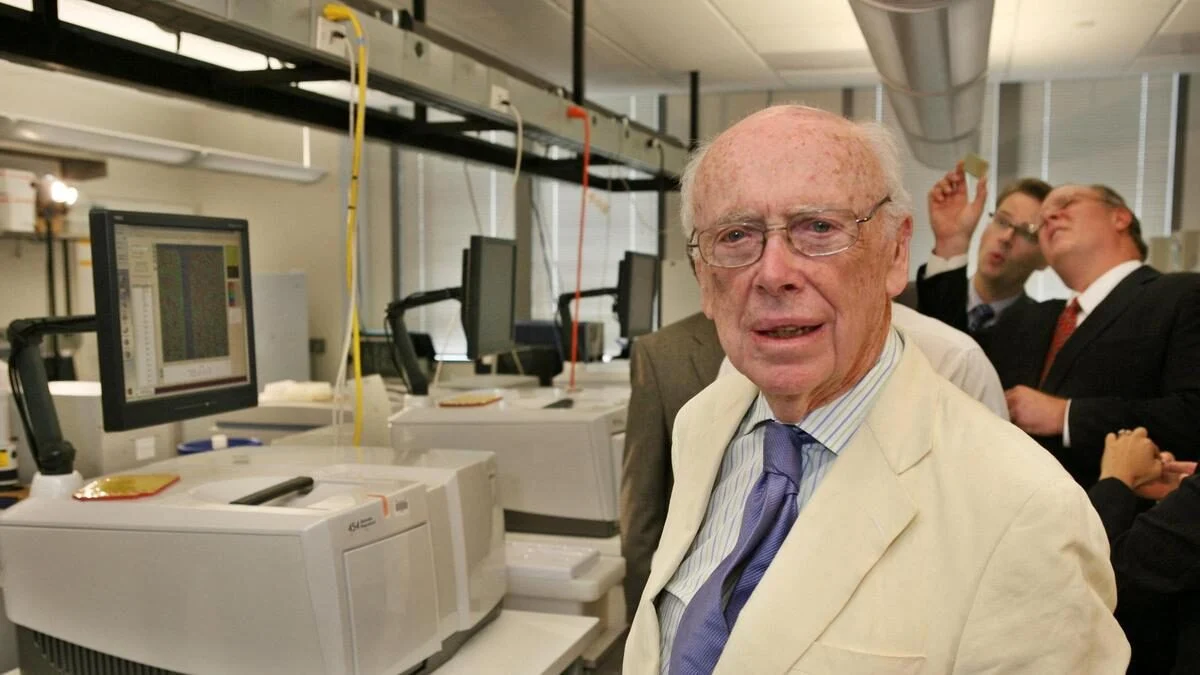
James Watson, the American biologist who helped reveal the structure of DNA and opened a new era in modern genetics, has died at the age of 97. His family confirmed that he passed away on November 7, 2025, in East Northport, New York. Watson’s work with Francis Crick and Maurice Wilkins led to the discovery of the double-helix model in 1953, a breakthrough that transformed biology and medicine and earned the three scientists the Nobel Prize in Physiology or Medicine in 1962. Their research laid the foundation for understanding how genetic information is stored, transmitted and altered, shaping everything from medical research to biotechnology.
Although his scientific achievements placed him among the most influential figures in the history of science, Watson’s later years were overshadowed by controversy. In 2007 he made remarks claiming that genetic differences made Africans less intelligent, comments that were widely condemned as racist and unsupported by scientific evidence. The reaction from the global academic community was swift, and Cold Spring Harbor Laboratory asked him to step down from his leadership roles shortly after. More than a decade later, a documentary brought renewed attention to his comments, prompting the laboratory to remove all remaining honorary titles from Watson in early 2020 and cut all institutional ties, calling his statements offensive and unacceptable.
The controversy deeply affected Watson’s public reputation and professional standing. In 2014, facing financial challenges and isolation from the scientific community, he auctioned his Nobel Prize medal at Christie’s, where it sold for $4.1 million. The medal was purchased by Russian businessman Alisher Usmanov, who later returned it to Watson, saying that the recognition of the discovery should remain with its original recipient.
Watson’s death closes a chapter on one of the most significant figures in genetic science, a researcher whose groundbreaking discovery reshaped human understanding of life but whose later views left a complex and divisive legacy. His contribution to biology remains monumental, yet his public statements ensured that the final years of his life were marked as much by controversy as by scientific achievement.