Danger on the Packet: Why Food Warning Labels Are Still Missing in Bangladesh
When children in Dhaka open a packet of brightly coloured snacks, few parents stop to examine what is inside. The taste is appealing, the price is affordable, and the packaging looks harmless. But health experts warn that behind those attractive wrappers lies a growing public health crisis.
Across Bangladesh, the rapid spread of packaged foods high in sugar, salt, saturated fat and trans fat is increasingly linked to obesity, diabetes, heart disease and other non-communicable diseases (NCDs). Despite this, consumers still receive little clear information about the risks hidden inside these products.
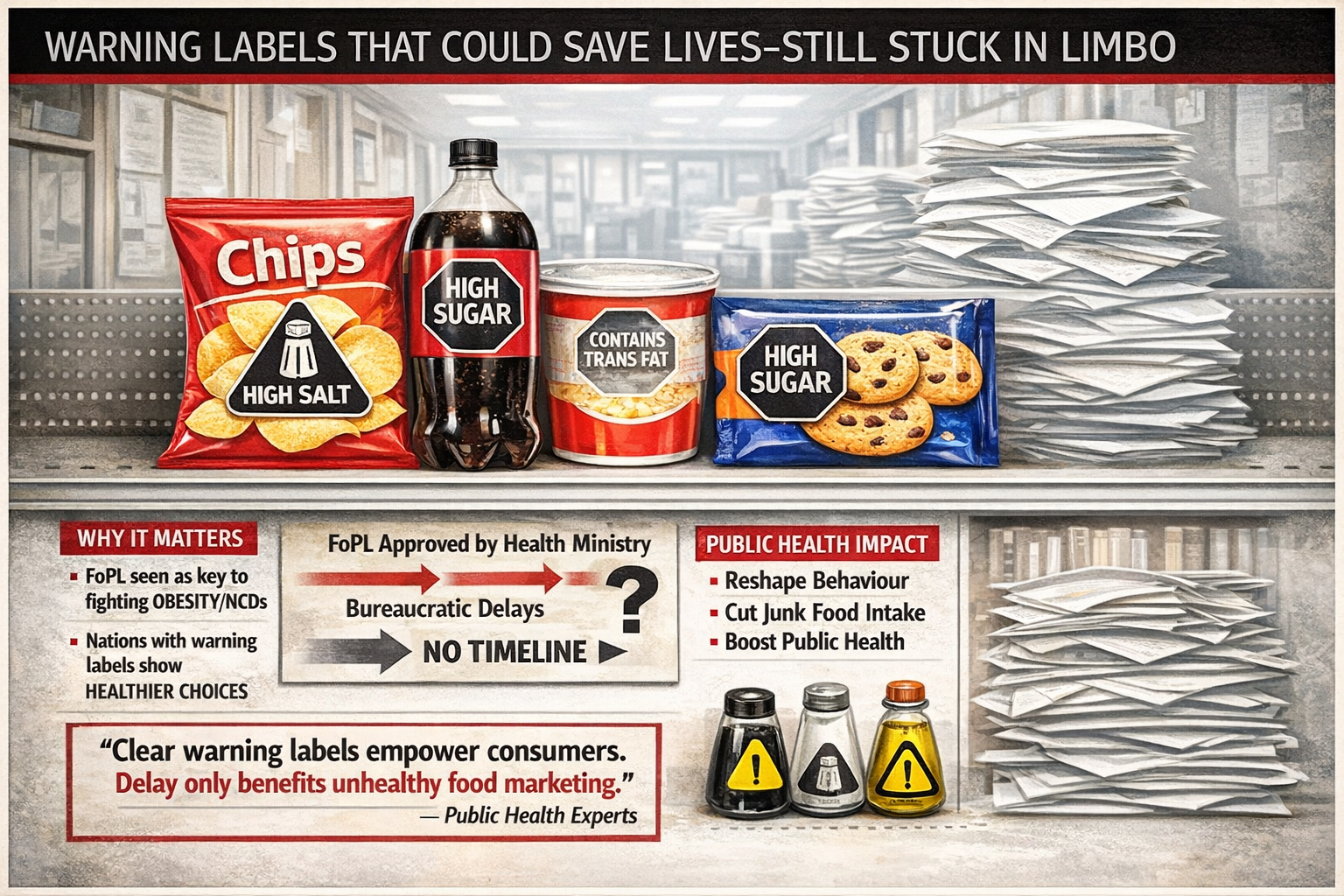
Public health advocates argue that a simple solution—Front-of-Pack Labelling (FoPL)—could significantly reduce harm. These labels place clear warnings on the front of food packets, alerting buyers when a product contains excessive unhealthy ingredients.
A Silent Health Threat
Packaged snacks, instant noodles, sugary drinks and processed foods have become everyday items, particularly for children and working families. While nutritional information is often printed on the back of packets, it is usually written in small text and difficult to understand.
“People rarely read detailed nutrition tables,” said Abu Ahmed Shamim, associate scientist at the BRAC James P Grant School of Public Health. “But simple warning symbols on the front can immediately influence purchasing decisions.”
Children are especially vulnerable, experts say, because of aggressive marketing and a lack of awareness about long-term health effects.
Delayed Regulations
Bangladesh has discussed introducing FoPL for years. Draft amendments to food labelling rules were prepared as early as 2023, but they never came into force. Although the interim government renewed its commitment in 2025 and announced plans to align with global standards, implementation has yet to be seen.
Officials from the Bangladesh Food Safety Authority (BSFA) say a new version of the Food Safety (Labelling of Packaged Food) Regulations has been prepared for 2026. The proposed rules would require warning labels on the main display panel of food and beverage packages.
“We have completed the technical work and design,” said a BSFA scientific officer, adding that final approval is now pending at the ministry level.
Global Practice, Local Delay
Many countries already require warning labels for high sugar, salt and fat content. Studies show that these labels are more effective than traditional nutrition charts in reducing unhealthy consumption.
Health researchers warn that Bangladesh cannot afford further delays. According to international health data, non-communicable diseases account for more than two-thirds of all deaths in the country, with unhealthy diets being a major contributor.
“Excess salt intake during childhood raises the risk of hypertension and kidney disease later in life,” said Dr Sohel Reza Choudhury of the National Heart Foundation Hospital. “Clear warnings could help prevent that.”
Consumers Want Clarity
Many consumers say they would welcome FoPL. Working parents, in particular, say they rely on packaged foods because of time constraints.
“I don’t have time to read tiny letters on packets,” said a Dhaka-based working mother. “A clear warning sign would help me choose better food for my family.”
Legal and public health experts stress that strong enforcement will be essential. Without oversight by regulatory bodies such as the BSFA and BSTI, they warn, labels may exist only on paper.
The Cost of Inaction
Recent surveys show that a majority of processed foods sold in Bangladesh contain excessive salt and sugar. Health experts warn this trend is driving a nationwide rise in obesity, hypertension and cardiovascular disease.
For many parents, the issue is deeply personal. A simple warning label, they believe, could prevent children from developing lifelong health problems.