Concerns Rise as ICE Policy May Allow Home Entry Without a Judge-Signed Warrant
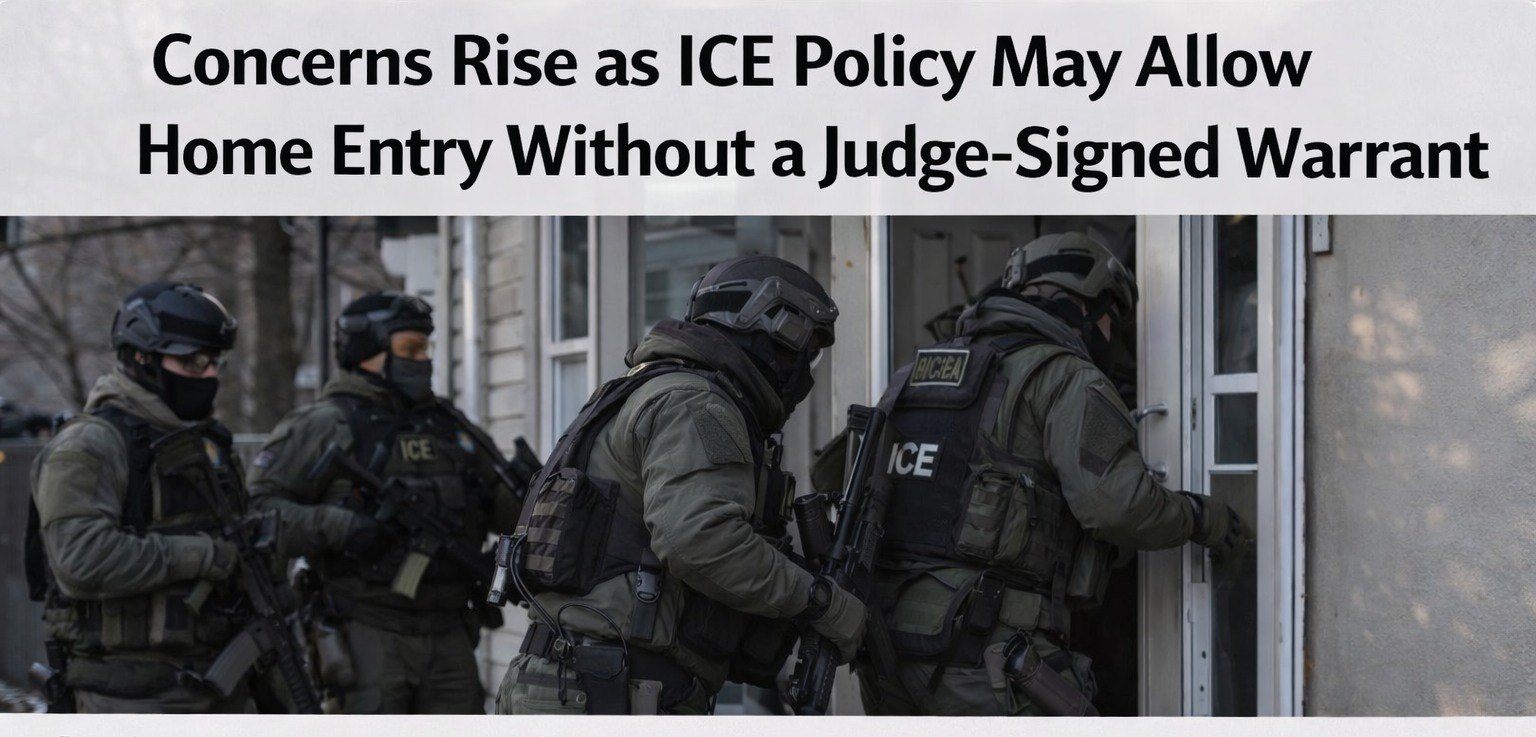
Immigrant communities across the United States are expressing growing concern after reports revealed a major shift in how federal immigration agents may conduct arrests inside private homes.
For many years, a widely repeated legal warning in immigrant neighborhoods has been simple: do not open the door to immigration officers unless they show a warrant signed by a judge. This guidance is rooted in long-standing court interpretations of the Fourth Amendment, which protects people from government searches or forced entry into their homes without approval from an independent court.
Because of these legal protections, immigration agents have historically attempted arrests in public spaces—often monitoring homes for hours while waiting for a person to step outside.
However, a newly reported internal memo from US Immigration and Customs Enforcement (ICE) suggests a significant change. According to information obtained by media sources, ICE agents may now be instructed to enter a home using only an administrative warrant signed by an immigration officer, rather than a warrant signed by a judge—particularly in cases where the person targeted has a final deportation order.
The policy change is being discussed at a time when the administration of President Donald Trump is reportedly expanding nationwide enforcement operations aimed at detaining and deporting undocumented immigrants.
While it remains unclear how widely the new approach is being used, a reported incident in Minneapolis on January 11 drew attention. Witnesses said ICE agents wearing heavy tactical gear and carrying rifles entered a home by force after presenting an administrative warrant.
The reports have triggered political reactions. US Senator Richard Blumenthal of Connecticut has reportedly called for a congressional hearing and asked Homeland Security Secretary Kristi Noem to provide clarity on the policy. In public comments, Blumenthal warned that the idea of government agents breaking into homes without judicial authorization is alarming for all Americans.
Legal observers also pointed to earlier Supreme Court opinions that described forced home entry as one of the most serious threats to constitutional privacy rights.
Experts say this shift could increase tension and risk, especially in states with “stand-your-ground” laws, where misunderstandings during law enforcement encounters can quickly escalate. Concerns have also been raised over the possibility of mistakes, including incorrect addresses, which could put innocent residents in danger.