How the Donkey and Elephant Became Symbols of America’s Two Major Political Parties
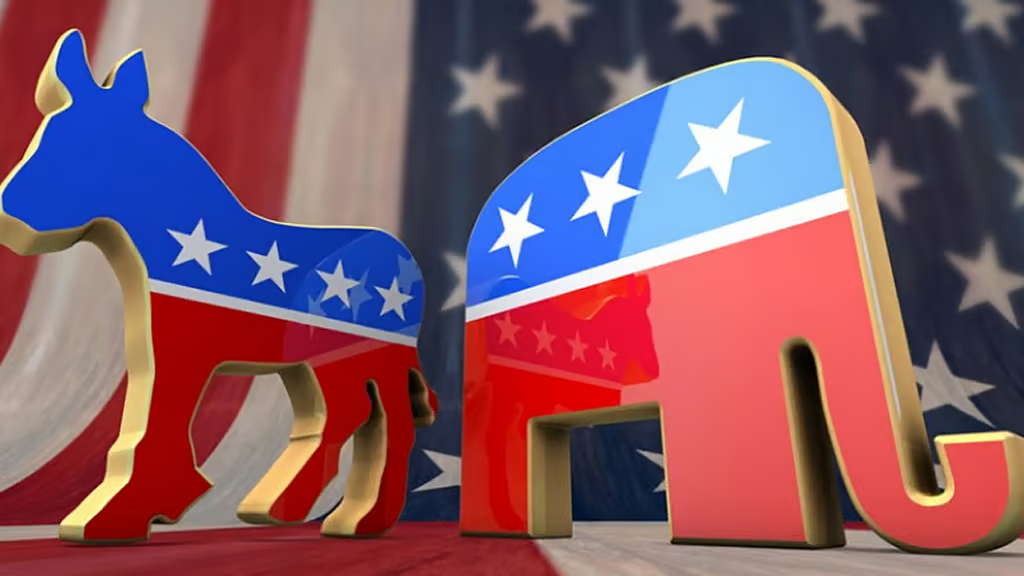
The Democratic donkey and Republican elephant have become familiar symbols of American politics, but their popularity can largely be traced to the work of one influential political cartoonist, Thomas Nast.
Whenever election season arrives in the United States, images of donkeys and elephants appear everywhere—from political cartoons and campaign badges to internet memes and fashion merchandise. The two animals have become an inseparable part of American political culture, representing the country’s two major political parties.
Interestingly, their popularity is closely linked to the work of Thomas Nast, a pioneering political cartoonist who helped shape their modern identities. Nast, who worked for Harper’s Weekly from 1862 to 1886, was also influential in developing the familiar modern images of Santa Claus and Uncle Sam.
Known for his detailed woodblock illustrations, Nast used political satire to address major issues of his time, including the Civil War, Reconstruction, immigration and political corruption. His cartoons frequently targeted powerful figures and institutions while highlighting the struggles of vulnerable communities.
One of his most notable works, titled Worse Than Slavery, was published in 1874. It depicted a frightened Black family facing a smiling member of the Ku Klux Klan (KKK), highlighting the violence and intimidation experienced by African Americans.
Another cartoon, They Are Swallowing Each Other, criticized the connections between corrupt New York political groups and the KKK. Rather than portraying victims, Nast depicted two grotesque, heavyset figures appearing to consume each other.
Unlike many modern editorial cartoons, which communicate through a few simple lines, Nast’s illustrations were densely detailed and filled with symbols. Each image presented a broader political argument that readers could examine from different perspectives.
How the Elephant Became the Republican Symbol
Nast’s 1874 cartoon The Third Term Panic is widely credited with popularizing the elephant as the symbol of the Republican Party.
Several months before the 1874 midterm elections, the New York Herald, which supported Democratic candidates, circulated reports suggesting that Republican President Ulysses S. Grant was considering seeking a third presidential term in 1876.
At the time, the 22nd Amendment to the U.S. Constitution had not yet been adopted, meaning there was no constitutional limit preventing a president from serving a third term. However, the prospect was politically controversial.
A supporter of the Republican Party, Nast responded by portraying the New York Herald as a donkey wearing a lion’s skin. The animal was depicted spreading fears about Grant establishing authoritarian rule and frightening other animals.
Among them was a large, somewhat clumsy-looking elephant labeled “The Republican Vote.” The animal appeared to be dangerously close to falling over the edge of a cliff.
Although the cartoon helped popularize the elephant as a Republican symbol, Nast was not the first artist to associate the animal with the party. Republican campaign advertisements had used the phrase “See the Elephant” at least a decade earlier. The expression, dating back to the Civil War era, broadly referred to facing danger or fighting courageously.
The Story Behind the Democratic Donkey
The donkey had been associated with the Democratic Party long before Nast began drawing political cartoons.
The connection dates back to President Andrew Jackson and his 1828 presidential campaign. Political opponents mocked Jackson by calling him a “jackass.” Rather than rejecting the insult, Jackson embraced the label and incorporated it into his political messaging.
Nast subsequently helped popularize the donkey through his cartoons, repeatedly using the animal to represent Democrats.
His contribution was not simply assigning animals to political parties. He transformed American politics into a chaotic zoo or circus, using animal imagery to criticize political leaders on both sides.
Although Nast strongly supported the Republicans, he did not spare his own party from criticism. He frequently portrayed Republicans as frightened and vulnerable creatures, suggesting that their political influence did not necessarily translate into sound judgment.
The Democratic donkey also received an unflattering treatment. In an 1879 cartoon, Nast depicted a stubborn donkey hanging by its tail over an abyss labeled “Financial Chaos,” seemingly on the verge of falling.
In many of his illustrations, both the elephant and the donkey appeared close to political disaster, reflecting Nast’s critical view of the Republican and Democratic leadership of the late 19th century.
The Cartoonist’s Tragic Final Years
By the 1880s, Nast had become one of America’s most influential and feared political cartoonists. Corrupt politicians and political operatives across the ideological spectrum viewed his illustrations as a serious threat.
However, his later life took a tragic turn. Nast lost his fortune after becoming a victim of an investment fraud scheme, despite spending much of his career warning the public against corruption and deception.
In 1890, he attempted to rebuild his finances by publishing a book of Christmas illustrations. By then, however, much of his earlier creative momentum had faded.
His final decade was marked by illness and financial hardship, along with the painful realization that his most influential work was already behind him.
A Satirical Legacy That Endured
Despite Nast’s difficult final years, his artistic legacy continues to shape American politics.
The Republican Party formally adopted the elephant as its symbol, while Democrats have never officially embraced the donkey in quite the same way. Nevertheless, the animal remains a familiar presence at Democratic rallies, campaign events and party gatherings.
There is an irony in how enthusiastically both parties have embraced the animals. In Nast’s original cartoons, neither creature was necessarily portrayed in a flattering light. Both were often depicted as confused, vulnerable or on the verge of disaster.
Perhaps the parties simply adopted the symbols without examining their satirical origins. Or perhaps they understood the joke and decided that embracing it was the most fitting response.
More than a century later, the elephant and the donkey remain instantly recognizable symbols of America’s political identity—a lasting testament to the influence of Thomas Nast and the power of political satire.