US–Iran Peace Talks Uncertain as Switzerland Meeting Postponed Amid Lebanon Ceasefire Deal
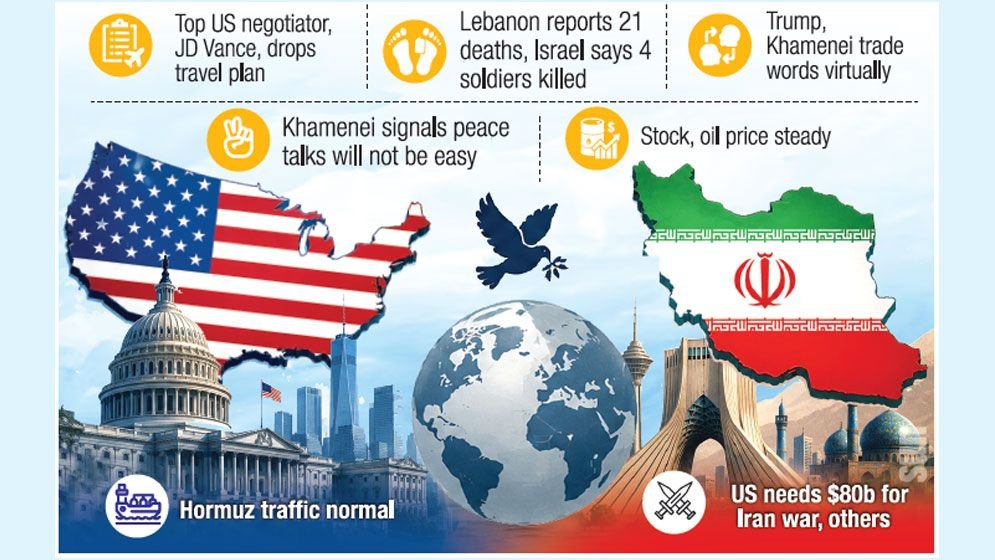
Planned United States–Iran peace talks in Switzerland were postponed on Friday, as renewed fighting in Lebanon and shifting regional dynamics cast fresh uncertainty over efforts to advance a broader Middle East peace agreement.
The technical discussions, scheduled to take place at the Burgenstock resort in Switzerland, were intended to build on an interim US–Iran understanding aimed at reducing regional tensions and moving toward a more permanent settlement. However, officials confirmed the meeting was cancelled after escalating violence in Lebanon disrupted diplomatic preparations.
A senior Hezbollah lawmaker said Iran had informed the group that negotiations with Washington could not proceed without a comprehensive ceasefire in place, adding that the United States bore responsibility for ensuring Israel halts its military operations.
The situation in Lebanon deteriorated sharply earlier in the week, with 18 people killed in airstrikes and four Israeli soldiers reportedly killed by Hezbollah fighters. The escalation briefly threatened to derail broader diplomatic efforts tied to the US–Iran framework, which includes provisions for ending hostilities across multiple fronts.
A senior US official told Reuters that Israel and Hezbollah had agreed to a ceasefire set to begin at 4 pm local time on Friday, following mediation efforts involving US and Qatari negotiators, with assistance from Iran. “Hezbollah and Israel are now in a ceasefire,” the official said, speaking on background.
Meanwhile, preparations for the Switzerland talks had already been advanced when US Vice President JD Vance withdrew his planned participation, according to individuals familiar with the matter. The Swiss foreign ministry later confirmed the postponement, while stating that Switzerland remained ready to facilitate future discussions.
Iranian state-linked Tasnim news agency reported that Tehran was seeking clearer signals of US implementation of the interim agreement before committing fully to the negotiations.
On the Israeli side, Defence Minister Israel Katz said Israeli forces would continue their presence in southern Lebanon, signaling continued disagreement over key provisions of the broader peace framework, including Lebanese sovereignty. He also said Israeli operations in occupied areas would continue.
Iranian officials reiterated that negotiations with the United States would remain within Tehran’s “red lines”. Chief negotiator Mohammad Bagher Ghalibaf said Iran would defend its national interests firmly, warning of a “crushing response” if pressured. Supreme Leader Ayatollah Mojtaba Khamenei also indicated approval of the deal despite internal reservations, emphasizing that engagement with Washington did not imply acceptance of its position.
The broader agreement reportedly envisions a permanent end to hostilities in the region, including Lebanon, the lifting of a US naval blockade on Iranian ports for a limited period, and the reopening of the Strait of Hormuz under temporary fee-free conditions. It also includes Iran’s commitment not to pursue nuclear weapons.
Markets reacted cautiously to the developments, with oil prices and global stocks stabilizing after earlier volatility driven by optimism over a potential de-escalation. Analysts warned that uncertainty over the timing of talks could keep investors cautious in the coming weeks.
At the same time, maritime data showed increased shipping activity through the Strait of Hormuz, with 25 commercial vessels crossing in a single day—the highest level in two months—suggesting partial recovery in trade flow.
The US Defence Department is also expected to request around $80 billion from Congress to cover costs related to the conflict, according to reports, adding a domestic political dimension to Washington’s Middle East policy.
Despite the ceasefire announcement in Lebanon and diplomatic engagement continuing behind the scenes, the postponement of the Switzerland talks underscores the fragility of the current peace process and the unresolved tensions across the region.