Fierce Redistricting Battle Intensifies Ahead of U.S. Midterm Elections
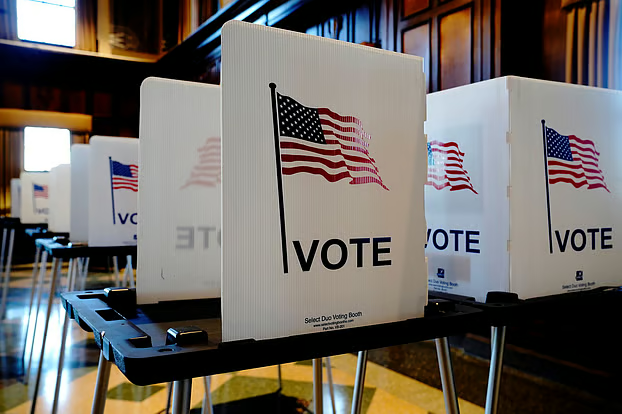
A growing political battle over redrawing congressional district boundaries, known as gerrymandering, is escalating ahead of the upcoming U.S. midterm elections, with analysts warning it has evolved from an electoral strategy into a deeper constitutional and democratic crisis.
According to a recent analysis by Reed Galen, the redistricting push initially driven by Republicans was aimed at minimizing potential losses in the midterms by leveraging state-controlled legislatures and weakened judicial oversight. However, the process has now expanded into a broader national dispute over political representation and electoral fairness.
Gerrymandering refers to the manipulation of electoral district boundaries to create a political advantage for a specific party. The term originates from 1812, when Massachusetts Governor Elbridge Gerry approved a redistricting plan that was mocked for its salamander-like shape, leading to the term “gerrymander.”
The analysis notes that while both major parties have used redistricting tactics over time, Republicans have been more aggressive in recent decades, particularly at the state level, where they gained significant legislative control during and after the Obama administration era. These gains allowed them to reshape electoral maps in multiple states.
In response, Democrats have also begun countermeasures in some states. In California, voters approved a ballot measure aimed at countering partisan redistricting, significantly reducing Republican-leaning districts. However, similar efforts have faced legal and political setbacks in other states.
In Virginia, a court struck down a proposed redistricting plan that would have heavily favored Democrats, preserving the existing 6–5 congressional split. The ruling highlighted ongoing legal limitations in partisan map-drawing efforts.
The analysis also points to recent U.S. Supreme Court decisions that have weakened enforcement of the Voting Rights Act of 1965, making it easier for states to redraw districts in ways that may dilute minority voting strength. In some cases, Republican-led states have already begun restructuring districts following these rulings.
In Louisiana, authorities even paused ongoing primary elections to implement new district maps, effectively invalidating votes already cast—a move critics describe as unprecedented and deeply controversial.
As the midterm campaign season progresses, both parties appear increasingly reliant on strategic manipulation rather than policy-driven platforms. Out of 435 House seats, only about 10% are considered truly competitive.
The analysis argues that Republicans continue to emphasize national security and economic strength under Donald Trump’s influence, while Democrats focus heavily on institutional reform and opposition messaging rather than presenting a cohesive economic agenda.
With voter confidence increasingly shaped by legal battles and district manipulation, the report concludes that American voters are left with limited choices, raising concerns about the long-term health of the country’s democratic system.