Migrants Held for Months in U.S. Detention as Backlogs Grow and Conditions Worsen
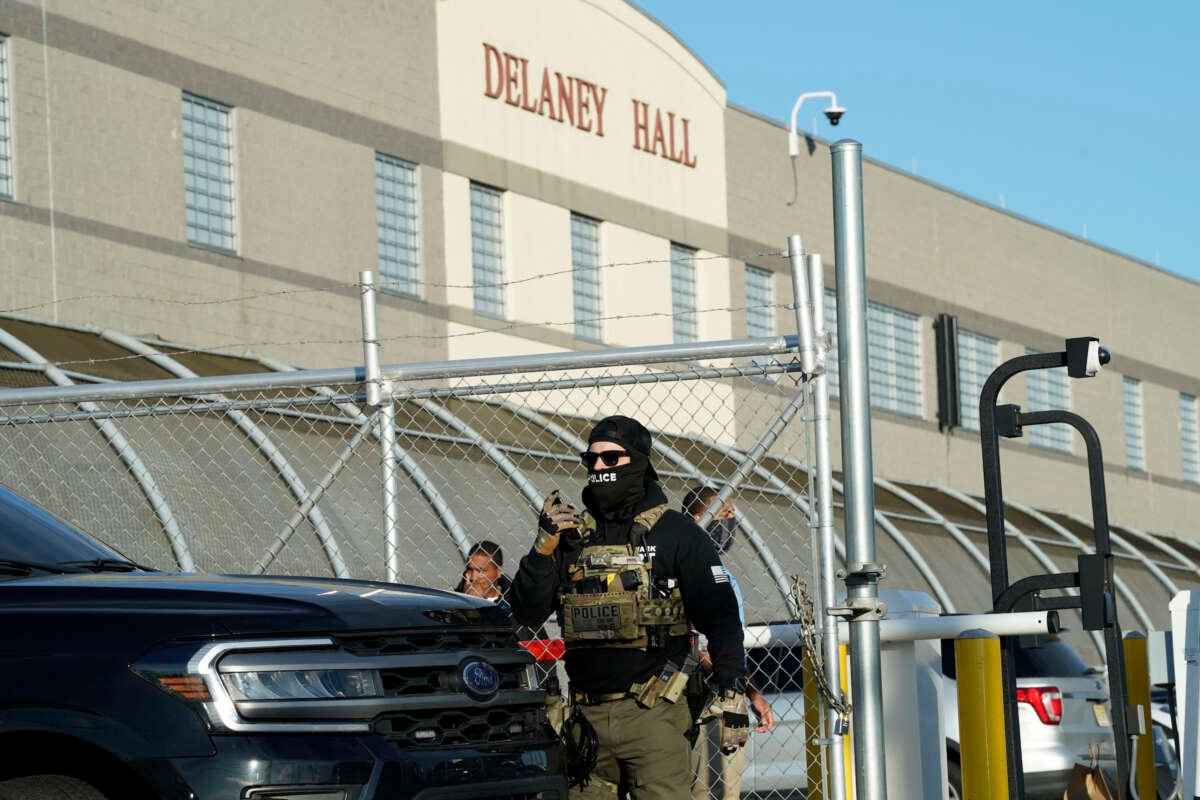
Immigration and Customs Enforcement (ICE) agents stand near a gate as they watch protestors at a demonstration in Newark, New Jersey May 7, 2025, outside Delaney Hall, a newly converted immigrant detention centre. Delaney Hall has the ability to hold over a 1000 people, and the detention facility, privately owned by The GEO Group, holds a contract with the federal government to house people arrested by ICE. (Photo by TIMOTHY A. CLARY / AFP) / “The erroneous mention[s] appearing in the metadata of this photo by TIMOTHY A. CLARY has been modified in AFP systems in the following manner: [Newark, New Jersey] instead of [Elizabeth, New Jersey]. Please immediately remove the erroneous mention[s] from all your online services and delete it (them) from your servers. If you have been authorized by AFP to distribute it (them) to third parties, please ensure that the same actions are carried out by them. Failure to promptly comply with these instructions will entail liability on your part for any continued or post notification usage. Therefore we thank you very much for all your attention and prompt action. We are sorry for the inconvenience this notification may cause and remain at your disposal for any further information you may require.”
Thousands of migrants are spending extended periods inside U.S. immigration detention centers, as prolonged confinement becomes increasingly common under President Donald Trump’s second term, according to lawyers, advocates, and detainees.
New federal policies have sharply limited the ability of immigration judges to release people while deportation cases move through heavily backlogged courts. As a result, many migrants are being held for six months or longer — even those who are willing to leave the country voluntarily.
Felipe Hernandez Espinosa, a 34-year-old asylum seeker from Nicaragua, has been detained for nearly seven months. He was first held at a temporary facility in Florida and later transferred to a large detention camp at the Fort Bliss Army base in Texas.
Human rights groups and detainees describe harsh living conditions at several detention sites, including unsanitary bathrooms, insect infestations, inadequate food, and limited medical care. Two migrant deaths were reported at the Fort Bliss facility earlier this year.
“I came seeking protection, but I’ve been locked up for months without committing any crime,” Hernandez said during a phone interview from detention. “I feel desperate.”
Detention Periods Lengthen
Although the U.S. Supreme Court ruled in 2001 that immigration detention should generally not exceed six months, current data shows a growing number of people held well beyond that timeframe.
As of mid-January, more than 70,000 people were in Immigration and Customs Enforcement (ICE) custody nationwide. Over 7,000 had been detained for at least six months, and dozens had been held for more than two years — a significant increase compared with late 2024.
The Department of Homeland Security has not publicly explained why detention times have increased or why some migrants remain confined even after requesting deportation.
Voluntary Departure Delays
The Trump administration has promoted a program offering financial assistance and travel costs to migrants who agree to leave the U.S. voluntarily. However, immigration attorneys report that many detainees who signed departure forms remain in custody while waiting for court hearings.
Legal advocates say they are encountering cases where migrants ready to return home are still being held for months with no clear timeline.
“The conditions are so difficult that many people simply give up,” said an immigration advocate based in Florida. “They just want out.”
Legal Protections Ignored
Some detainees have been granted protection under international agreements, such as the United Nations Convention Against Torture, which prevents deportation to countries where they face serious harm. In the past, such individuals were often released while awaiting resettlement or alternative arrangements.
Attorneys say that is no longer happening consistently. Several migrants who won protection rulings remain in detention for months or even years, despite court orders favoring their release.
Mental Health Toll
Families describe severe emotional and psychological strain on detainees, including depression, anxiety, and hopelessness.
One man detained for eight months missed the birth of his child and the funeral of a close family member. Another detainee said uncertainty and lack of information from authorities worsened his mental health.
Some migrants have been released only after filing lawsuits in federal court challenging their prolonged detention.
A System Under Strain
Immigration experts say detention backlogs are worsening due to limited court capacity and diplomatic delays with countries that are slow to accept deportees.
Advocacy groups warn that extended confinement without clear timelines undermines due process and humanitarian standards.
For Hernandez, the wait continues. After months of uncertainty, his immigration hearing is scheduled for later this month.
“I’m always thinking about when this will end,” he said. “I just want my life back.”