Ghana Cooperated With US Deportations, Now Ghanaians Face Visa Freeze
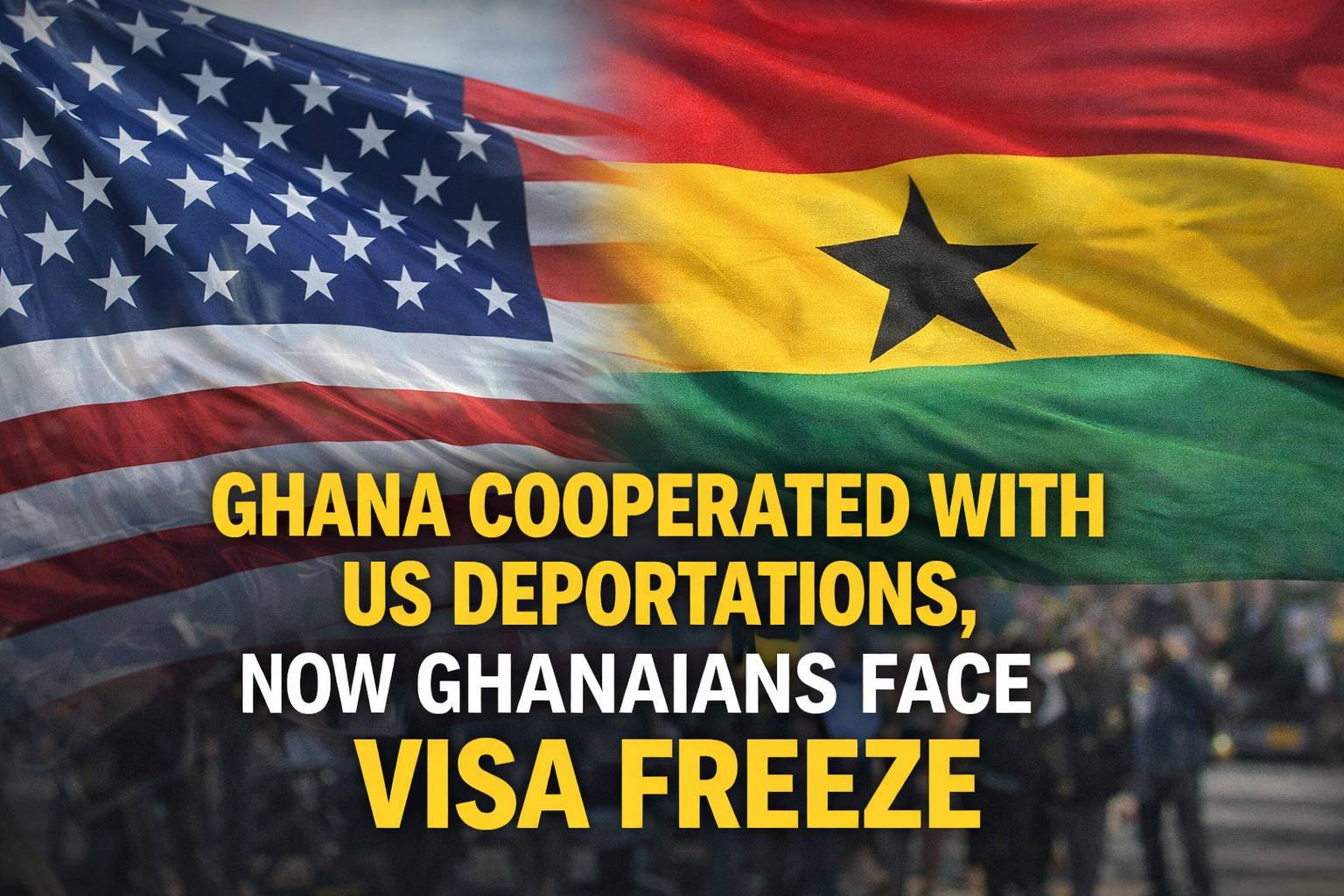
Ghana is facing growing criticism at home after being included in a new US freeze on immigrant visas, despite recent cooperation with Washington’s deportation agenda. The Trump administration has placed immigrant visa restrictions on 75 countries, including 27 African nations, in what officials describe as a move aimed at limiting entry from countries whose migrants are accused of using public assistance at high rates.
Ghana’s inclusion has angered activists and lawyers who argue the country helped the US manage deportations and was then punished with tighter immigration controls. Oliver Barker-Vormawor, a Ghanaian civil rights activist and lawyer, said the US pressured Ghana into accepting deported migrants — including some who were not Ghanaian — and then imposed a harsher visa suspension once it achieved its goals. He described the visa freeze as unfair and called on African countries to consider reciprocal measures in response.
The visa pause affects immigrant visas, restricting long-term legal migration pathways such as family reunification, work-based settlement, and some education-related immigration. Short-term travel, including tourism and business visits, is reportedly not included, a distinction critics say favors wealthier visitors while limiting opportunities for people seeking permanent stability or safety.
The new policy also arrives as African nations face increasing pressure from US immigration enforcement. Data cited in the report said deportations from African countries have surged in recent years, along with a rise in immigration-related arrests of African-born migrants, even though a large portion of those detained reportedly have no criminal records.
Advocates say many of the affected African countries are already struggling with conflict, climate challenges, and economic instability, and the visa freeze adds another barrier for families and individuals trying to build legal pathways to the United States. For many, the lack of clarity around how the ban will be applied has increased fear and uncertainty.
Ghana’s case has drawn special attention because the country has recently promoted diaspora engagement through initiatives such as tourism and investment outreach, even while quietly playing a role in assisting US deportation operations. With the new restrictions set to begin on January 21, critics in Ghana say the decision highlights an unequal partnership and raises questions about how African governments should respond to US immigration demands going forward.