US Homebuilding Depends on Immigrant Workers, Especially in Fast-Growing Metro Areas
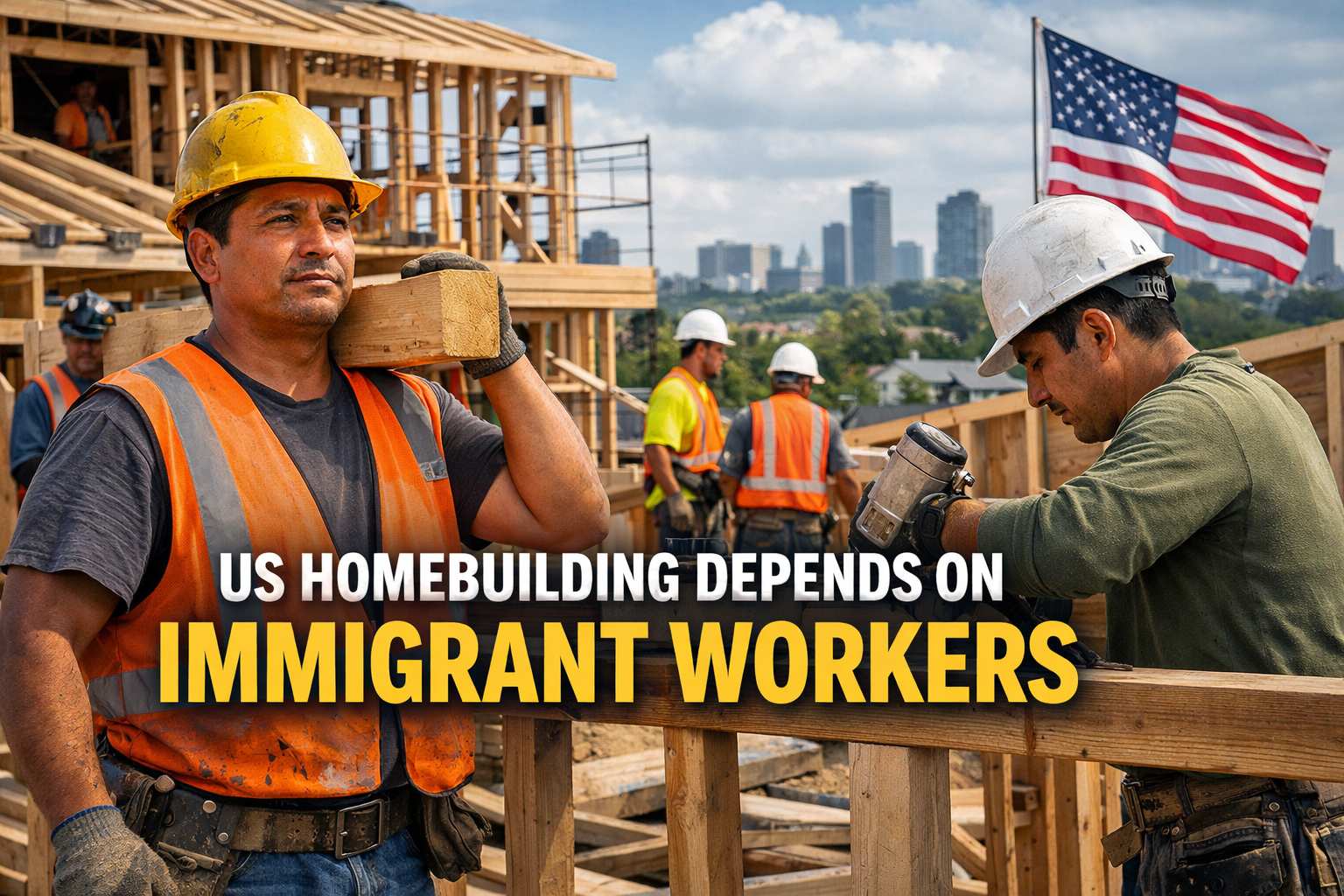
America’s homebuilding and remodeling industry is heavily supported by immigrant labor, particularly in the metro areas that are constructing the most new housing. A new report from Harvard’s Joint Center for Housing Studies found that cities issuing the highest number of residential building permits also tend to have the largest share of foreign-born workers in construction trades.
The research showed that in seven metro areas that approved at least 150,000 residential building permits between 2019 and 2023, about 54% of construction trade workers were foreign-born on average. In many of the most active housing markets, including Los Angeles, Washington, DC, Dallas, and Houston, immigrant workers made up over 60% of the construction labor force.
Dallas-Fort Worth-Arlington led the nation in total residential building permits during that period, issuing more than 348,000 permits, while immigrants accounted for around 61% of its construction workforce. Houston was close behind, with nearly 348,000 permits and a foreign-born workforce share of about 63%. Washington, DC had one of the highest proportions, with immigrant workers making up roughly 66% of construction workers, while Los Angeles was close to 63%.
Experts warn that stricter immigration policies, including deportations and restrictions on immigration, could deepen the existing construction worker shortage, which is already estimated to be in the hundreds of thousands nationwide. Economists say that fewer available workers could lead to rising labor costs, project delays, and increased housing prices, especially in high-growth regions where demand for new homes remains strong.
Housing researchers noted that areas most dependent on immigrant labor could struggle to meet housing supply needs if the workforce shrinks. Industry surveys also suggest that many construction firms are already having difficulty filling open roles, with worker shortages contributing to project slowdowns and higher delivery costs.
While the long-term outlook may improve through better training programs, increased productivity, modular housing expansion, and more young people and women entering construction careers, researchers say the labor shortage is likely to worsen in the near future, adding more pressure to housing affordability across the United States.