Banks Warn Credit Card Rate Cap Could Hurt Consumers, Restrict Access to Loans
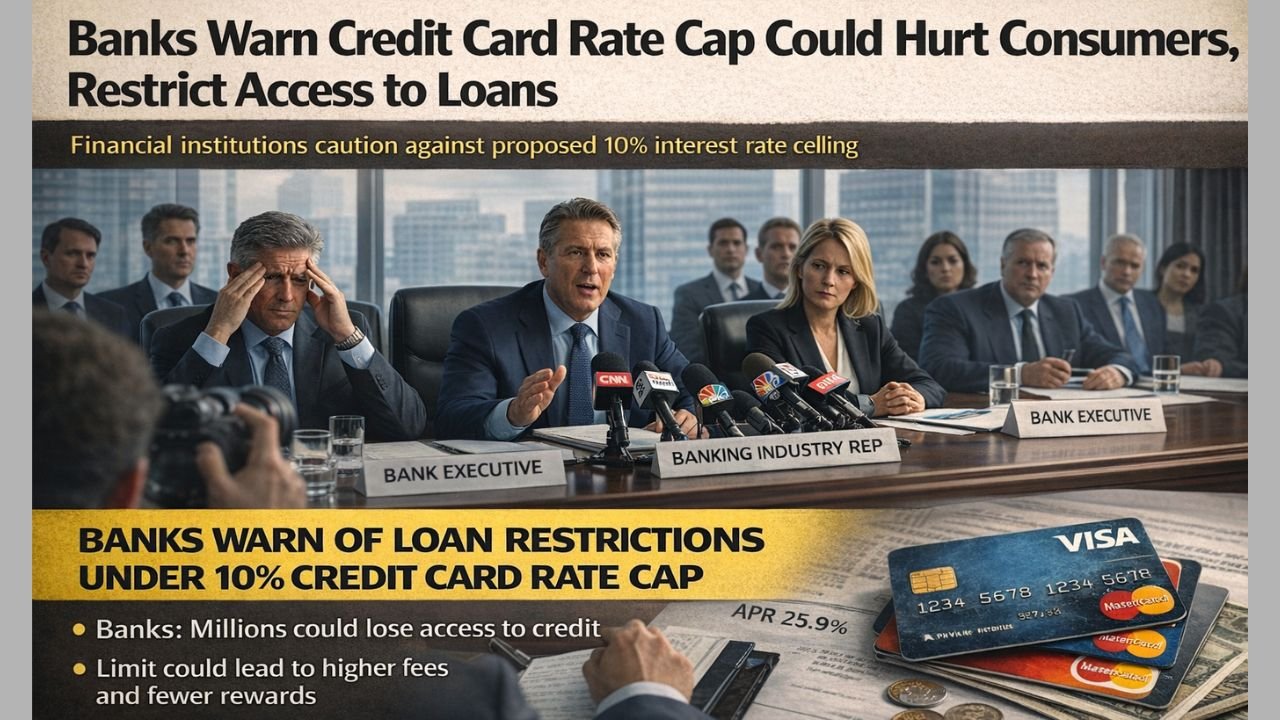
A proposal to cap U.S. credit card interest rates at 10 percent has sparked intense debate, with banks and financial institutions warning that the move could ultimately harm consumers rather than help them.
Former President Donald Trump has announced plans to limit credit card interest rates to a maximum of 10 percent for one year, starting January 20, as part of an effort to reduce the cost of living. However, banks say the proposal could lead to reduced access to credit for millions of Americans, particularly low-income and high-risk borrowers.
Financial industry groups said on Monday that imposing a strict interest rate ceiling would make credit card lending unprofitable for many banks. As a result, they warn that lenders may close accounts or significantly limit credit for customers with lower credit scores.
Risk of a Credit Crunch
According to the Electronic Payments Coalition (EPC), if a 10 percent cap is enforced, between 82 and 88 percent of cardholders with credit scores below 740 could see their credit card accounts closed or severely restricted.
EPC Executive Chairman Richard Hunt said that while price controls may sound appealing, they often produce unintended consequences. He argued that such limits could reduce financial options for families and weaken overall economic activity.
Banks also caution that consumers could face higher annual fees, fewer rewards and benefits, and increased monthly charges as lenders attempt to offset lost interest income. Reduced consumer spending could, in turn, slow economic growth.
Profitability Concerns in the Banking Sector
Credit cards play a central role in the U.S. consumer economy and are a major source of revenue for banks. Data from the Consumer Financial Protection Bureau shows that in 2024, average interest rates reached 25.2 percent on general-purpose credit cards and 31.3 percent on private-label cards, the highest levels since 2015.
The number of customers making only minimum payments also rose to its highest point in nearly a decade, underscoring growing financial stress among borrowers.
Morningstar analyst Michael Miller said the proposal faces significant hurdles and may be unlikely to take effect. Still, he warned that if implemented, a 10 percent cap would severely undermine the profitability of the credit card industry.
A Competing View
Not all experts agree with the banks’ assessment. A study by Vanderbilt University’s Policy Accelerator suggests that a 10 percent interest rate cap could save U.S. consumers nearly $100 billion annually, even if some borrowers with lower credit scores experience reduced access to credit.
Brian Shearer, the group’s director, said banks often overstate the risks, arguing that the industry’s profit margins leave room for adjustment. “Our research shows lenders could absorb some of the impact without widespread account closures,” he said.
If adopted, Trump’s proposal could set up a major clash between consumer protection goals and the financial sector’s business model. It remains unclear whether the plan would require congressional approval or how it would be implemented in practice.
While the policy’s future is uncertain, it has already ignited a broader national debate over credit costs, consumer debt, and the balance between regulation and market freedom in the U.S. financial system.