Heavy Explosive Demolitions Leave Large Areas of Gaza City in Ruins, Investigation Finds
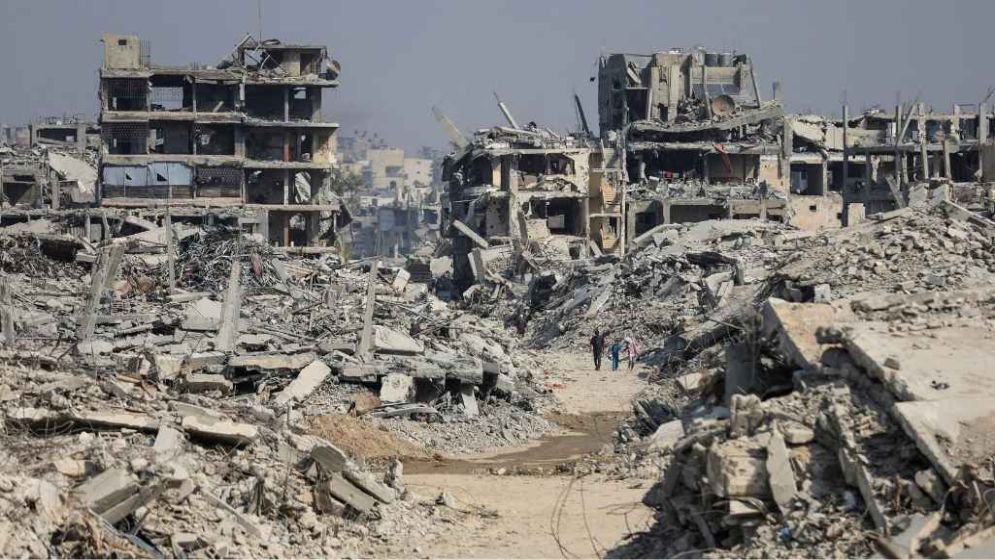
In the weeks leading up to a ceasefire in October, Israeli forces employed a powerful and unconventional demolition method in Gaza City, using armored vehicles packed with large quantities of explosives, according to a detailed investigation based on satellite imagery, eyewitness accounts, and expert analysis. The approach contributed to the widespread destruction of residential neighborhoods as ground forces advanced toward central parts of the city.
The vehicles involved were M113 armored personnel carriers that had been repurposed to carry explosive loads estimated by military specialists to range from one to three tons. As Israeli troops moved through densely populated districts, these detonations, combined with airstrikes and heavy machinery, flattened large clusters of buildings. Imagery and on-the-ground observations show entire blocks reduced to rubble during this period.
Residents and local officials reported that evacuations often occurred ahead of demolitions, though not in every case. Some families said they received no warning before explosions destroyed their homes. One such resident, whose multi-story house in the Tel al-Hawa neighborhood had already been damaged earlier in the conflict, described hearing repeated detonations within minutes of each other before his home was completely leveled. He said dozens of family members were displaced, with some now sheltering with relatives and others living in makeshift tents.
When investigators visited the area weeks later, fragments believed to be from destroyed armored vehicles were visible among the debris. Military experts who reviewed footage from the sites said the wreckage was consistent with internal detonations of heavily loaded APCs. The blast force, they explained, would be capable of collapsing multi-story buildings and scattering metal fragments across wide distances.
Specialists noted that using troop carriers as mobile bombs is highly unusual in modern warfare and carries a high risk of extensive damage in civilian areas. They estimated that the explosive force could rival that of the largest aerial bombs in Israel’s arsenal. Some experts suggested that commercially available explosive materials may have been used, though definitive identification would require chemical testing.
Israel’s military, responding to questions about the demolitions, said it operates according to international laws of war and employs engineering equipment only when deemed operationally necessary. It emphasized that decisions are guided by military necessity and proportionality, but did not provide details on specific incidents or targets.
Israeli officials and analysts have said the demolitions were intended to neutralize threats posed by explosives allegedly planted by militant groups inside buildings. Palestinian officials and Hamas representatives denied such claims, stating that the scale of destruction far exceeded any legitimate military purpose. International legal experts reviewing the evidence warned that deploying massive explosives in densely populated areas could violate humanitarian law if not justified by concrete military necessity.
Satellite analysis showed that hundreds of structures in several Gaza City neighborhoods were destroyed in the six weeks before the ceasefire, marking one of the most intense periods of urban devastation during the conflict. United Nations assessments indicate that a large majority of Gaza’s buildings have been damaged or destroyed since the war began, with Gaza City among the hardest-hit areas.
The investigation also found that the increased use of vehicle-based explosives coincided with limitations on Israel’s access to certain U.S.-supplied weapons and heavy bulldozers traditionally used for demolitions. As supplies of these tools became constrained, Israeli forces appear to have adapted by repurposing older armored vehicles that had previously been retired from frontline service.
Military historians noted that the M113 vehicles, first acquired decades ago, had long been considered inadequate for modern combat roles. Their renewed use in demolition operations marked a significant shift in tactics. Analysts said shortages of other equipment and the complexity of urban warfare likely influenced the decision to adopt such methods.
Legal scholars and human rights officials cautioned that if demolitions were not strictly tied to immediate military objectives, they could constitute unlawful destruction of civilian property. Israeli officials maintain that all targets were reviewed in advance and that munitions were selected to achieve operational goals while limiting harm to civilians.
As the ceasefire took hold, neighborhoods once filled with homes, shops, and public institutions were left unrecognizable. For many residents, the destruction represented not only physical loss but the erasure of decades of community life, raising ongoing questions about accountability, military conduct, and the long-term impact on Gaza’s civilian population.